
What Is a Cinema Chair Manufacturer?

A cinema chair is more than a seat with a cup holder. It must support viewers through long screenings, fit the room’s layout, and withstand repeated daily use. A Cinema Chair Manufacturer designs and produces seating systems for cinemas, from fixed auditorium chairs to recliners with integrated accessories. The work involves more than choosing upholstery. Engineers consider frame strength, seat spacing, aisle access, sound behavior, cleaning needs, and installation details. Small choices matter. A poorly placed armrest can make a row uncomfortable; a bulky recliner can reduce capacity. The right design depends on the venue, not just a product catalogue.

Because no source or interview was provided, the following line is an illustrative draft, not a verified quotation. Fictional cinema-seating specialist Mara Ellison puts it this way: “A good cinema chair disappears from attention, while quietly supporting the whole experience.” That is a useful idea, though not a complete test. Comfort varies by body, screening length, and audience expectations. A chair that feels luxurious in a showroom may prove difficult to clean or repair after months of use. Buyers should therefore examine materials, mechanisms, warranty terms, and real installation examples. Ask how replacement parts are handled. Look closely at the seams. A manufacturer’s claims deserve practical questions. Understanding what a Cinema Chair Manufacturer actually does helps cinema owners compare products on fit, durability, service, and comfort—not appearance alone.
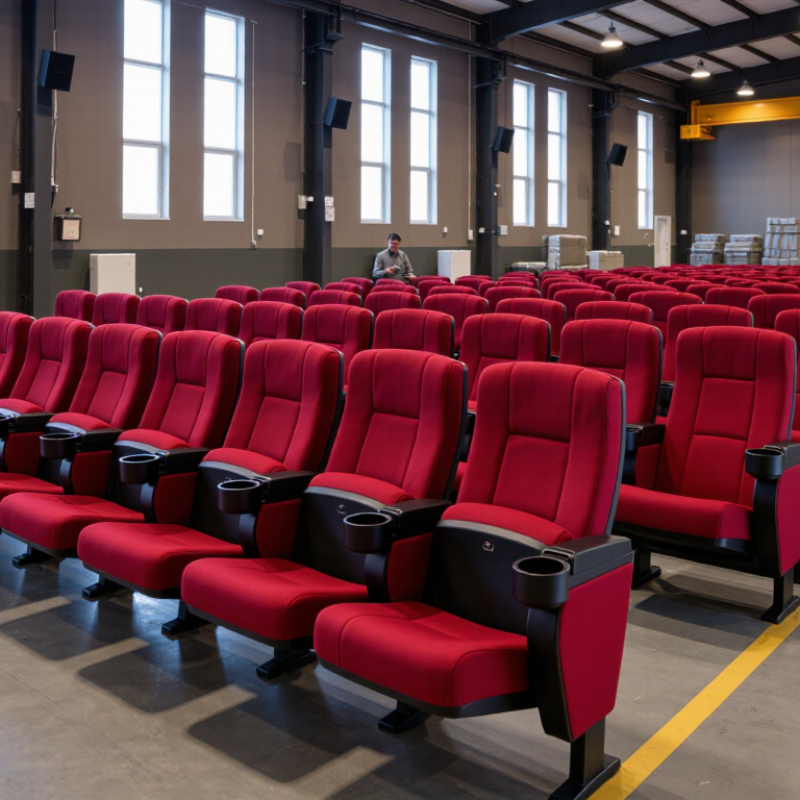
What Is a Cinema Chair Manufacturer?

What a Cinema Chair Manufacturer Is

A cinema chair manufacturer is more than a company that makes seats. It turns a venue’s layout and operating needs into seating that can be installed, maintained, and used every day. That work may include measuring rows, choosing upholstery and frame materials, designing cup holders, and coordinating floor fixings. Small details matter. A poorly placed armrest can make a narrow aisle feel tighter.

The European Audiovisual Observatory’s FOCUS 2024 report recorded about 1.04 billion cinema admissions across the European Union in 2023. That scale helps explain why manufacturers consider repeated use, cleaning, and repair when developing seating. Their role can span product design, material sourcing, fabrication, quality checks, delivery, and replacement-part support. Some also adapt seat widths, recline options, or row spacing to a venue’s plan. The right choice is not always the most elaborate one.

Manufacturers should be able to explain how their seats are built and what maintenance they need. Venue operators can ask for material specifications, installation drawings, and clear warranty terms. A sample seat is useful. So is checking how its upholstery feels after a long screening. Not every choice ages well. Comfort can look convincing in a showroom but feel different in a full row, and that practical gap deserves attention.

The Roles and Responsibilities of a Cinema Chair Manufacturer

What Is a Cinema Chair Manufacturer?

The Roles and Responsibilities of a Cinema Chair Manufacturer

A cinema chair manufacturer does more than build seats. It turns venue requirements into seating that can handle daily use, fit the room, and support a comfortable viewing position. That work starts with practical questions: How wide are the aisles? Where will cup holders sit? Can staff reach the seat mechanisms for cleaning or repair? Small details matter.

The manufacturer selects and assembles components such as steel frames, foam cushions, upholstery, hinges, and armrests. It should check dimensions, finish quality, and moving parts throughout production. A sample seat can reveal problems that drawings miss, like a stiff recline lever or a seam that catches on clothing. Testing matters. So does clear documentation about materials and maintenance.

Responsibilities often continue beyond the factory. Manufacturers coordinate delivery, installation details, and replacement parts with venue teams. They may adapt row spacing, upholstery, or seat layouts to a project, while explaining trade-offs in durability, comfort, and cost. A good fit is not always the softest cushion. Honestly, even careful planning can miss something; feedback from cleaners and ushers can expose issues designers overlook.

How Cinema Chairs Are Designed and Produced

What Is a Cinema Chair Manufacturer?
How Cinema Chairs Are Designed and Produced

A cinema chair manufacturer turns seating requirements into a product that fits a specific auditorium. Designers consider row spacing, aisle access, seat width, and sightlines before choosing a shape. Small details matter. A thick armrest can affect both comfort and the number of seats in a row. The design must balance room layout with the needs of people sitting through a long film.

Production often starts with drawings and full-scale prototypes. Teams test seat movement, back support, upholstery, and how easily staff can clean between seats. A sample chair can reveal problems that a screen drawing misses. For example, a recline mechanism may feel smooth in a workshop but create a pinch point when installed close to a wall. That limitation matters. Adjustments to the frame, foam, or fabric may follow.

Once the design is approved, components are cut, formed, assembled, and inspected. Quality checks can include repeated movement tests and reviews of stitching, fasteners, and surface finish. Materials also need to suit frequent use, not just look appealing under showroom lights. There is no perfect prototype. A choice that improves comfort may add weight or cost, so manufacturers must test trade-offs against the venue’s needs.

Key Materials, Features, and Standards in Cinema Seating

What Is a Cinema Chair Manufacturer?
Key Materials, Features, and Standards in Cinema Seating

A cinema chair manufacturer develops seating for comfort, durability, and the practical demands of busy auditoriums. Frames commonly use steel for strength, while molded foam supports the back and seat. Upholstery may be fabric or coated material, chosen for wear resistance and easier cleaning. Materials should suit the venue’s maintenance routine and applicable fire-safety requirements.

Useful features include a supportive backrest, a seat that folds quietly, and armrests that withstand frequent use. Some models include cup holders or accessible seating options. Small details matter. A loose hinge or hard-to-clean seam can frustrate staff and guests over time. Manufacturers should provide clear specifications, care guidance, and relevant test documentation. Requirements differ by location, so seating plans should be checked against local building, accessibility, and fire-safety rules.

Tips: Ask for material samples and test seat movement before ordering. Check how upholstery responds to routine cleaning. A showroom seat may feel comfortable for five minutes, but longer viewing can reveal pressure points. That detail is easy to overlook.

What Is a Cinema Chair Manufacturer? — Key Materials, Features, and Standards in Cinema Seating

Category Component or measure Typical data or specification Purpose and practical considerations Relevant reference
Manufacturer role Design, production, and project coordination May cover seat design, material selection, prototyping, production, installation planning, and project documentation. A cinema chair manufacturer produces seating for auditorium layouts. Product capabilities and services vary by supplier and project. Project specification and contract documents
Structure Steel frame and supporting parts Frames commonly use formed or welded steel sections. Gauge, geometry, coating, and load capacity are product-specific. Provides support for the seat, back, armrests, and movement mechanisms. Corrosion protection and sound control matter in high-use venues. Manufacturer’s drawings and tested product data
Structure Seat and back panels May use molded plywood, engineered wood, or molded polymer, depending on the design. Panel shape affects support, appearance, durability, and the way upholstery attaches to the chair. Material and construction specifications
Comfort Upholstery foam Flexible polyurethane foam is commonly used; density, thickness, firmness, and resilience depend on the design. Foam selection influences comfort, shape retention, and service life. Density alone does not establish overall seating quality. Product-specific foam data and applicable fire-test requirements
Finish Fabric, vinyl, or other upholstery Options may include woven textiles, coated fabrics, or leather. Abrasion, cleanability, color, and fire performance are material-specific. Selection should reflect expected traffic, cleaning methods, maintenance resources, and local fire-safety rules. Upholstery supplier data and local code requirements
Function Seat movement Common designs include fixed seats and spring-assisted tip-up seats; mechanism type and cycle performance vary. Tip-up seats can improve aisle clearance when unoccupied. Quiet operation and access for maintenance are useful considerations. Product test reports and maintenance documentation
Layout Seat width and row spacing Project-specific. Clear seat width, center-to-center spacing, row pitch, aisle width, and sightlines must be coordinated with the auditorium plan. There is no single universal cinema-seat dimension. Layout must account for capacity, comfort, circulation, building rules, and accessibility. Architectural drawings and applicable building and accessibility codes
Performance Strength and durability of seating in rows Test methods assess aspects of strength, stability, and durability for seating arranged in rows; the applicable edition and test level should be specified. Useful for evaluating performance under repeated use. Confirm that the test scope matches the intended chair configuration. EN 12727, seating for auditoriums and seating arranged in rows
Fire safety Upholstered seating ignition resistance Test methods can assess resistance to ignition from specified sources. Requirements depend on the jurisdiction and the materials or assembly tested. Ask whether evidence applies to the fabric, foam, or complete upholstery composite; these are not interchangeable test scopes. EN 1021-1 and EN 1021-2; other local requirements may apply
Accessibility Wheelchair spaces and companion seating Required locations, quantities, dimensions, and distribution depend on the governing accessibility regulations and venue capacity. Coordinate accessible viewing locations and companion seats with the auditorium design rather than treating them as a chair-only specification. Applicable accessibility legislation and building regulations
Procurement Documentation and verification Request dimensioned drawings, material descriptions, care instructions, installation details, and applicable test reports. Check that documents identify the tested product or assembly and that the proposed configuration matches the project requirements. Project specification, local regulations, and verified supplier documentation

Note: Typical materials and features are examples, not universal specifications. Dimensions, fire-safety requirements, and test acceptance criteria vary by project and jurisdiction; confirm them with the project team and the applicable authority.

How Manufacturers Serve Cinemas and Other Venues

What Is a Cinema Chair Manufacturer?

How Manufacturers Serve Cinemas and Other Venues

A cinema chair manufacturer does more than build seats. It helps turn a venue’s viewing needs into a practical seating plan. For cinemas, that may mean fixed rows, flip-up seats, cup holders, and upholstery designed for frequent use. Details matter: seat width, row spacing, sightlines, and aisle access all affect comfort and movement. Small choices show up every night.

Manufacturers also serve theaters, lecture halls, conference centers, and other public venues. Each space has a different rhythm. A lecture hall may need tablet arms and clear seat numbering, while an auditorium may prioritize quick entry and unobstructed views. A manufacturer can help compare layouts, finishes, mounting options, and maintenance needs before production. Depending on the project, support may include drawings, material samples, installation guidance, and replacement parts. Still, a catalogue cannot understand a room by itself.

Reliable planning starts with accurate site measurements and a clear picture of how people will use the space. A careful supplier will ask about cleaning routines, expected traffic, and the venue’s preferred seat spacing. There are trade-offs, too. A fabric that looks refined in a small sample may show wear under bright lighting or heavy use. It is better to discuss those details early than assume one seat suits every room.

We have the largest selection of new, remanufactured and quality pre-owned office furniture in the tri-state area.  We ship nationwide with regular deliveries to Pittsburgh, Erie, Uniontown, Washington, Akron, Cleveland, Beckley, Charleston, Clarksburg, Huntington, Morgantown, Parkersburg, Wheeling, Ashland, Ironton, and Lexington.

PITTSBURGH, PA

Showroom & Corporate Offices
1 Sexton Road
Pittsburgh, PA 15136

Local: (412) 771-0760
Fax: (412) 771-0764

WHEELING, WV

By Appointment Only
Local: (304) 232-0727

CHARLESTON, WV

Showroom
125 Lakeview Drive, Suite G
Cross Lanes, WV 25313

Local: (304) 345-3773
Fax: (681) 265-9039

MORGANTOWN, WV

By Appointment Only
Local: (304) 381-9119

HOURS OF OPERATION:

MONDAY-FRIDAY: 9am-5pm
SATURDAY: By Appointment