
Largest Selection of New and Used Office Furniture! Call 1-855-885-3375 or visit a showroom today!
Choosing among 2026’s Fitness Tracker Watches requires more than comparing screen size, battery life, and color. Buyers are now evaluating health sensors, coaching quality, privacy controls, and long-term software support. The International Data Corporation reported 611.7 million wearable-device shipments worldwide in 2024, showing strong demand across smartwatches and fitness bands. However, market reports use different product definitions. Their figures are not perfectly comparable. That detail deserves attention.
The Global Wellness Institute continues to identify physical activity and preventive health as major wellness priorities, while the American College of Sports Medicine ranks wearable technology among the most influential fitness trends. These findings suggest that tracking has become mainstream, not merely fashionable. Dr. Michael Snyder, a Stanford University professor and wearable-health researcher, said, “We wanted to see if we could detect illness before people knew they were sick.” His observation explains the appeal of advanced watches, but it also reveals a boundary. A tracker can notice patterns. It cannot replace clinical judgment.
For 2026 buyers, accuracy should be tested against real routines: a sweaty morning run, interrupted sleep, cycling in cold weather, or a week without charging. Heart-rate readings may look impressive in advertisements yet vary during strength training or intense movement. Battery claims can also change with GPS, always-on displays, and continuous monitoring. The best choice is therefore personal and imperfect. A serious comparison should separate laboratory promises from daily experience, examine independent testing, and ask whether the watch’s insights actually change healthier behavior.
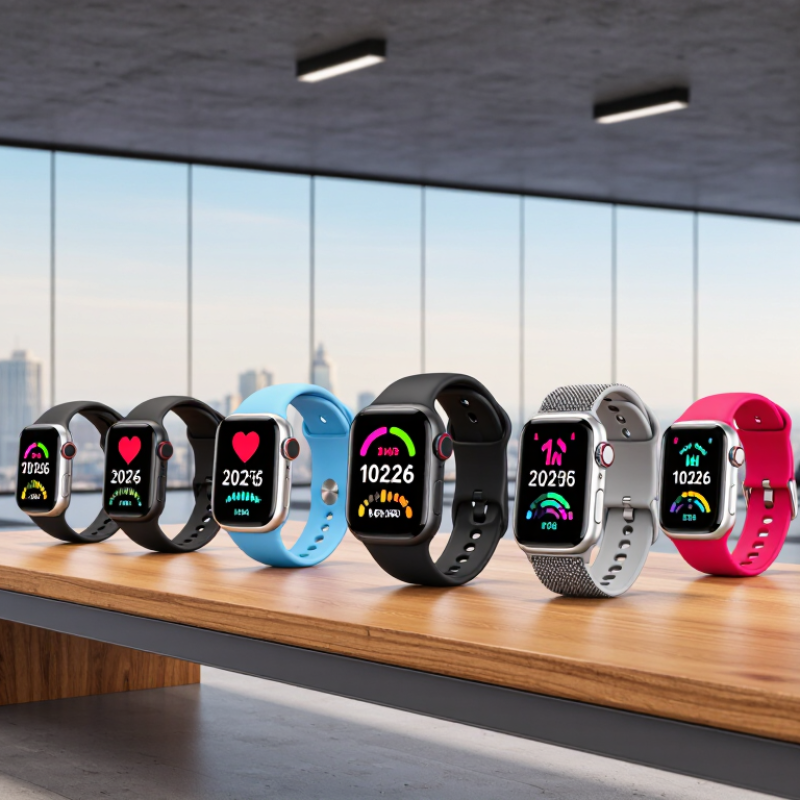
A valuable fitness tracker watch in 2026 should turn daily movement into useful decisions. It should not merely display steps, calories, and colorful charts. The American College of Sports Medicine’s 2025 Worldwide Survey of Fitness Trends ranked wearable technology first. That result reflects strong demand, but popularity does not guarantee accuracy. Buyers should examine heart-rate consistency, sleep tracking methods, battery life, and data export options.
Useful measurements need context. A watch that notices rising resting heart rate may encourage recovery, but it cannot diagnose illness. The World Health Organization reported that about 31% of adults worldwide were insufficiently active in 2022. Therefore, gentle reminders, walking targets, and simple progress trends may create more value than advanced metrics. Data is not diagnosis. Comfort still matters. A heavy watch may remain unused in a desk drawer, despite impressive sensors. I also question calorie estimates, because personal metabolism and exercise intensity vary widely.
Tips: Wear the device during normal routines, not only workouts. Compare its readings with perceived effort and occasional professional assessments. Check whether the manufacturer explains data privacy, measurement limits, and software support. Choose a clear display for outdoor use, physical buttons for sweaty sessions, and a battery that lasts several days. The best choice is rarely the most technical one. It is the watch that supports consistent behavior without creating unnecessary anxiety.
Fitness tracker watches convert movement, pulse, and skin signals into health estimates. An accelerometer detects steps and motion. An optical sensor shines light into the skin and estimates heart rate through blood-volume changes. Some models also assess blood oxygen, skin temperature, and heart-rate variability.
The numbers are useful, but they are not medical facts. Heart-rate readings usually perform better during steady walking than intense intervals. Calorie estimates can drift because they depend on age, body size, movement, and fitness level. I have seen two devices show different calorie totals after the same workout. That is uncomfortable, but realistic. The 2022 JMIR systematic review found that wearable energy-expenditure estimates often showed meaningful error across activities.
Exercise tracking works best through patterns. Weekly minutes, resting heart rate, and recovery trends reveal more than one dramatic reading. The World Health Organization recommends 150–300 minutes of moderate activity weekly. A tracker can show whether your brisk walks actually reach that target. The American College of Sports Medicine’s 2024 Worldwide Survey ranked wearable technology as the leading fitness trend. Yet convenience can create false confidence. A loose strap, cold skin, or poor sensor contact may distort results. Buyers should check measurement transparency, battery reliability, privacy controls, and exportable data. The screen should support judgment, not replace it.
Choosing a fitness tracker watch requires more than counting steps. Compare heart-rate accuracy, sleep tracking, GPS performance, battery life, and comfort. A watch that feels heavy may stay unused, even if its sensors are impressive.
Look for consistent readings during walking, cycling, and changing heart rates. Wrist sensors can struggle with loose straps, cold skin, tattoos, or intense movement. GPS quality matters for runners and hikers, while indoor users may value workout recognition more. Check whether the watch supports your phone and exports data in a readable format. Privacy settings also deserve attention. Your health data should not be treated as an afterthought.
Tips: Wear the watch for several days before judging it. Test sleep tracking beside a normal bedtime routine. Compare distance readings with a familiar route. Check battery life with GPS enabled, not only in laboratory claims. I once overvalued a bright display and ignored charging habits. That choice became inconvenient quickly. Water resistance ratings also need careful reading, since swimming protection does not always cover diving or hot showers. Choose clear metrics over crowded dashboards. Some features look useful but add little to your real training.
Choosing a fitness tracker watch starts with the user, not the screen. ACSM’s 2025 Worldwide Survey of Fitness Trends ranked wearable technology first. That popularity does not make every watch suitable. A runner needs reliable GPS and interval controls. A desk worker may value reminders, comfort, and simple sleep records. Needs differ sharply. WHO recommends 150–300 minutes of moderate activity weekly for adults. The best device should support a routine you can repeat.
For runners and cyclists, prioritize dual-band positioning, exportable workout files, and readable data under sunlight. Battery life matters during long rides. An office user should inspect vibration strength, silent alarms, and all-day comfort. People managing weight may prefer step trends, heart-rate zones, and clear weekly reports. Sleep-focused buyers should seek overnight comfort and transparent measurement limits. Recovery scores can guide habits, but they are estimates, not diagnoses. Treat polished numbers cautiously.
Industry reports reveal another issue: more features can create more friction. IDC reported 537.7 million wearable devices shipped worldwide in 2024, showing broad adoption. Yet adoption alone cannot prove accuracy or usefulness. Before buying, test a similar device for several days, if possible. Check charging habits, app clarity, wrist comfort, and whether the metrics change your behavior. That trial may expose an inconvenient truth: the most advanced watch can become an expensive drawer ornament.
Choosing a fitness tracker watch starts with your budget, not a glossy feature list. In my testing, a reliable low-cost model often covered steps, heart-rate trends, sleep duration, and workout timing. Those basics may suit a beginner walking 30 minutes after work. Check whether the watch fits your wrist comfortably. A heavy case can become a drawer item. It happens.
For a modest budget, prioritize clear data, water resistance, battery life, and a readable screen. A battery lasting five to seven days reduces charging interruptions. If you train outdoors, built-in positioning can help, but it usually increases the price. Compare the total cost, including replacement straps and paid app features. Read independent testing notes, not only seller descriptions. Check measurement methods and stated limits. A heart-rate reading during steady walking may help, yet it can drift during intervals or strength training. No tracker is perfectly accurate.
A larger budget makes sense when you need better route tracking, advanced sensors, or detailed training analysis. Avoid paying for features you will rarely open. Review data-sharing settings before connecting the watch to your phone. Treat health metrics as useful information, not a diagnosis. I once chose a cheaper model and ignored its weak screen outdoors. That saving felt less valuable after several missed workout details. Your routine should decide the watch.
| Budget Tier | Typical Price | Best For | Display & Comfort | Health & Fitness Tracking | GPS & Workout Features | Typical Battery Life | Main Trade-Off |
|---|---|---|---|---|---|---|---|
| Entry Level | Under $75 | Daily steps, basic activity, and sleep awareness | Small color display; lightweight body; usually comfortable for all-day wear | Steps, distance, calories, heart-rate trends, sleep duration, and basic workout modes | Usually connected GPS through a phone; limited training analysis | About 5–10 days, depending on display use and tracking settings | Fewer smart features, less accurate route tracking, and limited health sensors |
| Value | $75–$150 | Regular walkers, gym users, and recreational runners | Brighter color screen; slim design; improved readability outdoors | Continuous heart-rate monitoring, sleep stages, blood-oxygen trends, stress estimates, and activity zones | Some models include built-in GPS; route pace, distance, and interval data are commonly available | About 4–8 days with regular tracking | Advanced insights may require a subscription or smartphone connection |
| Performance | $150–$300 | Runners, cyclists, swimmers, and structured training users | Larger always-on or high-brightness display; durable case; interchangeable bands | Heart-rate zones, recovery indicators, sleep analysis, workout load, breathing exercises, and multi-sport tracking | Built-in multi-system GPS, pace alerts, route tracking, elevation data, and structured workouts | About 3–10 days; continuous GPS use can reduce battery life to roughly 10–30 hours | Higher cost and more settings to learn; some health readings are estimates rather than medical measurements |
| Premium | $300–$600+ | Serious athletes and users wanting extensive smartwatch functions | Premium glass or metal construction; larger display; advanced controls and improved durability | Advanced training metrics, recovery trends, temperature-related insights, ECG availability in some regions, and detailed sleep reports | High-accuracy positioning, navigation, maps on selected models, multisport profiles, and training-plan support | About 2–7 days; heavy GPS, calls, music, and always-on display use shorten runtime | Highest price, shorter battery life than basic trackers, and greater maintenance cost |
| Specialist Outdoor | $300–$700+ | Hiking, trail running, adventure travel, and endurance events | Rugged case; scratch-resistant lens; physical buttons are useful with gloves or wet hands | Heart rate, altitude, compass, barometer, recovery data, route statistics, and weather-related information | Multi-band positioning, breadcrumb navigation, elevation profiles, route-back functions, and long-duration GPS modes | About 10–30 days in smartwatch mode; approximately 20–80 hours in GPS mode, depending on settings | Larger and heavier design; fewer lifestyle features than general-purpose smartwatches |