
Largest Selection of New and Used Office Furniture! Call 1-855-885-3375 or visit a showroom today!
Choosing China’s top Aluminium Door And Frame suppliers requires more than comparing catalogue prices. The question involves manufacturing scale, thermal performance, fabrication accuracy, and export reliability. The U.S. Geological Survey’s Mineral Commodity Summaries 2024 reported that China produced approximately 41.5 million metric tons of primary aluminum in 2023. That represented roughly 59% of global output. This scale supports a deep network of billet, extrusion, coating, hardware, and assembly producers. Scale helps. It does not guarantee a dependable door system.
The International Aluminium Institute identifies buildings and construction as a major aluminum-use sector, commonly representing about one-quarter of demand in sector analyses. This matters because doors must perform beyond appearance. A serious supplier should document alloy grades, wall thickness, powder-coating specifications, thermal-break design, air infiltration, water penetration, and wind-load testing. EN 14351-1, ASTM E283, ASTM E331, and AAMA/WDMA/CSA 101/I.S.2/A440 may apply, depending on the destination market. Reports from accredited laboratories, including Intertek where applicable, can strengthen confidence. Certificates still require verification. Paperwork can be polished.
This guide evaluates Chinese suppliers through evidence rather than promotional claims. It considers factory capability, extrusion control, CNC assembly, glazing compatibility, packaging, lead times, and after-sales communication. Public trade data and supplier audits reveal useful patterns, although neither source is perfect. A factory visit may show labelled profiles, clean equipment, and sample corners with consistent gasket compression. Small details matter. The strongest shortlist compares tested assemblies, not isolated profiles or attractive showroom photos. Buyers should confirm whether testing covers the complete door and frame, including glass, hardware, seals, and installation interfaces. This approach cannot promise a flawless ranking. It offers a more defensible starting point for identifying China’s leading suppliers.
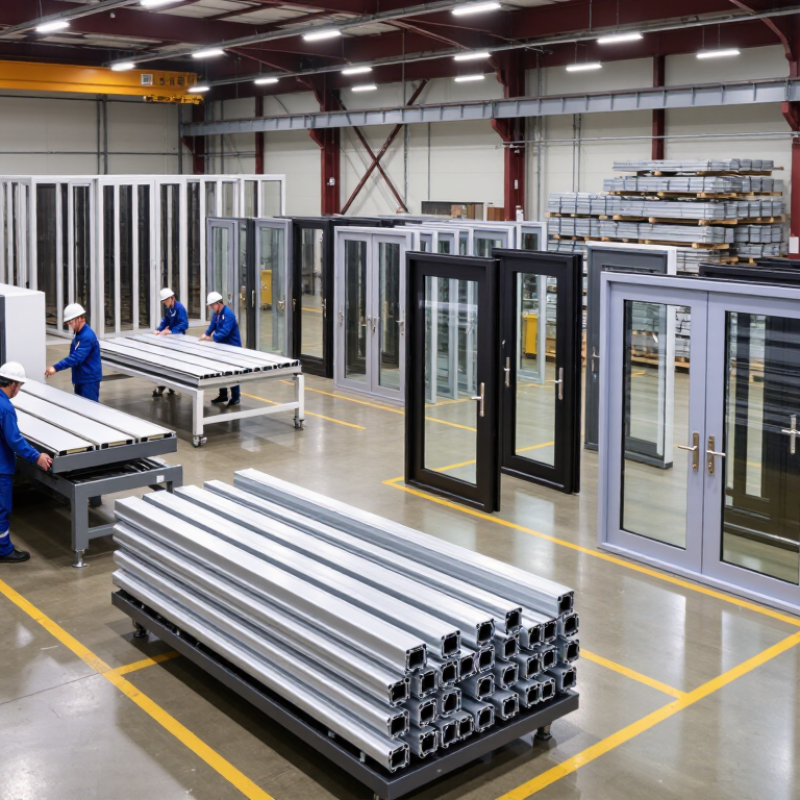
A top aluminium door and frame supplier in China is defined by controlled performance, not a polished catalogue. The International Aluminium Institute estimates that buildings consume about one-quarter of global aluminium demand. This makes material efficiency and long-term durability important. A dependable supplier should provide alloy grades, temper details, coating specifications, and batch traceability. Factory experience matters too. Inspect extrusion lines, CNC equipment, corner assembly, and finished samples when possible.
Performance testing separates serious suppliers from ordinary traders. Ask for documented air-infiltration, water-tightness, wind-load, thermal-transmittance, and operating-cycle results. These tests should match your project’s climate and local standards. UNEP’s 2023 Global Status Report states that buildings create about 34% of global energy demand and 37% of energy-related emissions. Therefore, thermal breaks, insulated glass compatibility, and accurate installation guidance deserve close attention. A technically strong supplier also explains limitations clearly. That honesty is valuable. No supplier is perfect, and test results can change with design, hardware, or installation quality.
Tips: Request recent project evidence, not only certificates. Compare section drawings, warranty terms, lead times, packaging methods, and replacement support. Visit the factory if the order is large. A very low quotation may hide thinner profiles, weak drainage, or inconsistent coating control. I would also ask for an independent inspection before shipment. It costs more, but prevents assumptions.
Reliable aluminium suppliers usually provide hinged doors, sliding doors, folding systems, entrance doors, and matching frame profiles. These products suit apartments, villas, offices, hotels, schools, and retail spaces. Thermal-break frames help reduce heat transfer, while double glazing can improve comfort and noise control. Sliding doors create wide openings for balconies and patios. Hinged doors often serve entrances where security and frequent access matter. Folding systems work well for restaurants and event areas, but they require accurate installation.
From project experience, the frame is only one part of performance. Drainage channels, corner joints, hinges, rollers, locks, and weather seals deserve equal attention. A small alignment error can cause water leakage or difficult operation. Suppliers should provide section drawings, material specifications, surface-finish details, and test records where available. Powder coating should look even, with no visible bubbles or scratches. Still, a polished catalog can hide practical weaknesses. Sample testing and factory communication remain necessary.
Tips: Ask for a complete hardware list and installation guide. Check profile thickness, glass options, warranty terms, and replacement procedures. For coastal projects, discuss corrosion-resistant finishes. Measure openings carefully before production. One overlooked millimeter can become an expensive adjustment. A dependable supplier also explains limitations instead of promising every result.
China Top Aluminium Door And Frame Suppliers?
China produced about 41.5 million tonnes of primary aluminium in 2023, according to the International Aluminium Institute. This scale offers broad manufacturing capacity, but capacity does not guarantee reliable doors or frames. During factory audits, I check alloy certificates, extrusion records, coating thickness, and hardware traceability. A polished sample can still hide weak corner joints or inconsistent wall thickness. Request production samples, not only showroom pieces. Compare drawings with finished dimensions. Small deviations can cause serious installation problems.
How to Evaluate Chinese Suppliers for Quality and Compliance
Ask suppliers to provide current ISO 9001 records, material test reports, and independent inspection results. Verify the certificate number with the issuing organization. Do not accept scanned documents without checking dates and company details. For projects involving fire, wind, thermal, or acoustic performance, request test reports matching the exact profile and glass specification. Generic reports may not represent your final assembly. The ISO Survey 2023 places China among the world’s largest holders of ISO 9001 certificates, yet certification alone remains only one control point. This is where buyers often become overconfident.
Tips: Use a written inspection plan. Check alloy grade, coating thickness, drainage holes, sealant adhesion, packaging, and batch labels. Require corrective-action photos before shipment. Keep retention samples. I would also schedule a video inspection, although it cannot replace physical testing. No checklist is perfect. A supplier’s response to an uncomfortable question often reveals more than its sales presentation.
This illustrative scoring model prioritizes product quality and regulatory compliance. Buyers should verify ISO 9001 quality procedures, aluminium alloy and finish specifications, dimensional tolerances, applicable performance tests, batch traceability, inspection records, and delivery capability before placing an order. The percentages are suggested evaluation weights rather than company or brand performance data.
Reliable aluminium door and frame suppliers should be judged beyond catalog images. Factory capability matters: billet sourcing, extrusion control, powder coating, thermal-break assembly, and final inspection. The U.S. Department of Energy reports that windows can represent 25–30% of residential heating and cooling energy use. Therefore, frame design affects operating costs, not only appearance. Ask for thermal conductivity data, air leakage results, and sample corner cuts. A polished sample can still hide weak drainage or uneven gasket compression.
Pricing usually follows aluminium index movement, profile weight, glass specification, hardware, finish, packaging, and order volume. The World Bank Pink Sheet records aluminium as a volatile industrial commodity, so a quotation should state its validity period and adjustment method. Standard profiles may ship within four to six weeks after drawing approval. Customized systems often require eight to twelve weeks, especially with new dies, unusual colors, or performance testing. These figures are practical estimates, not promises. Port congestion and drawing revisions can change them quickly.
Tips: Request a complete cost breakdown, not only a unit price. Confirm whether tooling, testing, packaging, and replacement parts are included. Compare water-tightness and wind-load reports under the same standards. Keep one approved finish sample on site; color differences become obvious in daylight. I have seen projects lose time because a “minor” handle change required new machining. That detail is easy to underestimate. Always approve shop drawings before production.
China Top Aluminium Door And Frame Suppliers?
Choosing a reliable aluminium door and frame supplier requires more than comparing prices. Experienced exporters should provide detailed quotations, product drawings, material specifications, and clear delivery schedules. Ask for evidence of aluminium alloy grades, coating performance, glass standards, and factory quality controls. A polished catalog is not proof. Sample corners, finish cards, and recent project references reveal more.
Export support should continue after production. Professional suppliers prepare packing lists, commercial invoices, installation drawings, and loading photos. Strong packaging protects frames from scratches, moisture, and twisting during long transport. Confirm container loading methods and replacement procedures before payment. Small gaps in communication can become expensive delays.
Installation support is equally important. Suppliers should explain anchor positions, drainage paths, glazing sequences, and adjustment points. Video guidance can help local contractors, but it cannot replace accurate site measurements. Check whether the supplier reviews opening sizes before fabrication. Real buildings rarely match drawings perfectly. That is where careful technical communication matters.
Supplier selection should include factory audits, sample approval, inspection checkpoints, and written warranty terms. Ask how they manage color variation between batches. Confirm response times for damaged parts and missing hardware. Some suppliers promise extensive support but provide vague answers. That is a warning sign. A dependable partner welcomes technical questions, records decisions, and adapts when site conditions change.
| Supplier Profile | Typical Product Scope | Common Aluminium Systems | Export Services | Installation Support | Typical Lead Time | Key Documents and Quality Checks | Best Selection Criteria |
|---|---|---|---|---|---|---|---|
| Standard residential door and window fabricator | Cost-effective aluminium entrance doors, sliding doors, casement windows, screens, and basic frames for houses and small developments. | Thermal-break profiles Non-thermal profiles Sliding systems | Export packing, commercial invoices, packing lists, certificates of origin, and container-loading photographs are commonly available. Confirm whether the supplier can arrange port delivery or only factory pickup. | Usually provides installation drawings, hardware schedules, and video guidance. On-site supervision may be available as a paid service through a local partner. | Approximately 25–45 days after drawing approval and deposit, depending on customization, glass, hardware, and production capacity. | Check approved shop drawings, profile alloy and temper, glass specification, coating thickness, corner-joint quality, drainage design, and packaging protection. | Suitable for buyers prioritizing competitive pricing and standard residential configurations. Request a complete sample corner before placing a large order. |
| Project-oriented door and façade manufacturer | Large quantities of doors, curtain-wall interfaces, storefronts, lift-and-slide doors, fire-rated assemblies, and customized façade packages. | Curtain wall Storefront Lift-and-slide Thermal break | Typically supports export quotations, container planning, palletized packing, technical submittals, material schedules, and coordination with freight forwarders. | More likely to provide project-specific shop drawings, method statements, installation manuals, remote training, and paid site assistance. Confirm responsibility for local labor and permits. | Approximately 35–70 days after final drawings, performance requirements, and material approvals are confirmed. | Review wind-load calculations, water-tightness and air-infiltration test reports, thermal calculations, product warranties, inspection plans, and mock-up procedures. | Select this profile when the project involves multiple elevations, unusual dimensions, performance requirements, or coordination with architects and contractors. |
| Commercial aluminium door specialist | Office, retail, school, hotel, hospital, and public-building doors, including glazed entrances, automatic-door interfaces, panic-exit doors, and access-control preparation. | Narrow-stile doors Heavy-duty entrances Automatic-door preparation | Can usually provide hardware coordination, crate packing, export labeling, spare-hardware lists, and documentation for multi-site deliveries. | May offer door schedules, handing information, hardware installation instructions, commissioning guidance, and troubleshooting support. Verify whether electrical connection is included. | Approximately 30–60 days, with additional time for special locks, closers, panic hardware, automatic operators, or certified fire and smoke assemblies. | Confirm door-cycle requirements, hardware compatibility, safety-glass markings, accessibility clearances, emergency-exit compliance, and corrosion-resistance requirements. | Best for commercial projects where door hardware, frequent use, accessibility, and maintenance requirements are more important than the lowest initial price. |
| Custom fabrication and architectural design supplier | Oversized pivot doors, arched or shaped frames, concealed-drainage systems, special finishes, slimline profiles, and architect-designed assemblies. | Oversized doors Custom extrusions Special finishes | Often supports detailed quotation breakdowns, finish samples, prototype development, crate design, and staged shipment planning. | Usually provides detailed installation drawings and may arrange factory acceptance inspections. On-site installation should be priced and defined separately in the contract. | Approximately 45–90 days because tooling, prototypes, special glass, and finish approval can extend production. | Verify prototype approval, maximum sash weight, hardware load rating, finish sample approval, dimensional tolerances, replacement-part availability, and maintenance instructions. | Choose this profile when appearance, unusual geometry, large dimensions, or a specified architectural finish drives the project. |
| Energy-efficiency focused manufacturer | Thermally improved windows and doors for cold, hot, or mixed climates, with insulated frames, low-emissivity glazing options, and improved sealing systems. | Thermal break Low-E glazing Multi-point locking Warm-edge options | Normally provides U-value information, glazing configurations, technical datasheets, export packing, and support for climate-specific specifications. | Installation guidance focuses on frame anchoring, perimeter sealing, insulation continuity, drainage, and prevention of thermal bridges. Confirm whether a local installation team is available. | Approximately 30–65 days after the thermal and glass specifications are approved. | Request whole-window U-value data, air-permeability class, water-tightness results, wind-load classification, condensation guidance, and evidence of tested configurations. | Suitable for projects with energy targets, cold winters, high cooling loads, green-building requirements, or strict indoor-comfort expectations. |
| High-volume OEM and contract supplier | Repeated door and frame configurations for housing programs, distributors, contractors, and multi-phase developments. | Standardized profiles Private-label packing Batch production | Common services include production scheduling, barcode or carton labeling, container optimization, export packing, and repeat-order documentation control. | Usually offers manuals, digital drawings, training videos, and spare-parts planning. Full installation support is less common unless included in a project agreement. | Approximately 20–50 days for repeat orders, subject to confirmed forecasts, raw-material availability, and production slots. | Check batch traceability, incoming-material inspection, final inspection records, defect-acceptance criteria, quality-control procedures, and capacity for peak demand. | Appropriate for distributors and contractors that need consistent specifications, repeatability, stable packaging, and predictable replenishment. |
| Supplier with international installation network | Doors and frames supplied together with surveying, delivery coordination, installation supervision, commissioning, and after-sales support. | Residential Commercial Project packages | May coordinate shipping schedules, customs documentation, site delivery planning, unloading requirements, and replacement-item shipments. | Can potentially provide site measurement, method statements, installer training, supervision, punch-list management, and handover documentation. Confirm local licensing and insurance. | Approximately 35–75 days for products, plus site scheduling time and local permit requirements. | Review installer qualifications, liability insurance, warranty boundaries, response times, spare-parts policy, inspection checklists, and acceptance procedures. | Best for overseas buyers that lack local façade expertise or require one party to coordinate products, installation, testing, and handover. |