What Are the Top Birch Plywood Suppliers in China?
China has become a major sourcing destination for Birch Plywood, serving furniture makers, interior contractors, packaging companies, and construction brands worldwide. However, identifying the “top” supplier requires more than comparing factory prices. Product consistency, veneer quality, bonding performance, and delivery reliability often matter more than a low quotation.
Timber architect Andrew Waugh once said, “Timber is the new concrete.” His statement reflects timber’s growing role in modern design, although Birch Plywood demands stricter evaluation than broad timber categories. A dependable Chinese supplier should provide clear information about birch veneer grades, core construction, panel thickness tolerance, moisture content, and glue performance. Buyers should also request test reports for formaldehyde emissions, bending strength, and water resistance. Small details matter. A rough edge can reveal weak production control.
Leading suppliers are commonly found across established manufacturing regions, including Shandong, Jiangsu, Zhejiang, and Guangxi. Yet location alone proves little. Factory audits, sample testing, export experience, and third-party certifications offer stronger evidence. FSC availability may matter for responsible sourcing, while E0 or CARB-related documentation can support indoor-use requirements. Requirements vary by market.
There is no flawless supplier list. Even experienced buyers can overvalue polished websites, attractive samples, or fast replies. I would treat those signals carefully. A sample may be excellent while mass production varies. The most reliable comparison combines factory evidence, independent testing, transparent communication, and several production records. This guide examines Chinese Birch Plywood suppliers through those practical standards, helping buyers distinguish genuine capability from persuasive marketing.
What Is Birch Plywood and Why Is It Made in China?
Birch plywood is an engineered panel made from thin birch veneers. Each layer is cross-banded and bonded under heat and pressure. This structure gives the panel a pale face, fine grain, and reliable screw-holding strength. The FAO Global Forest Resources Assessment 2020 describes plywood as a major forest-based panel product, supported by expanding construction and furniture demand. Birch itself is not always grown near Chinese factories. Manufacturers often combine imported birch logs or veneers with China’s large-scale panel-processing network.
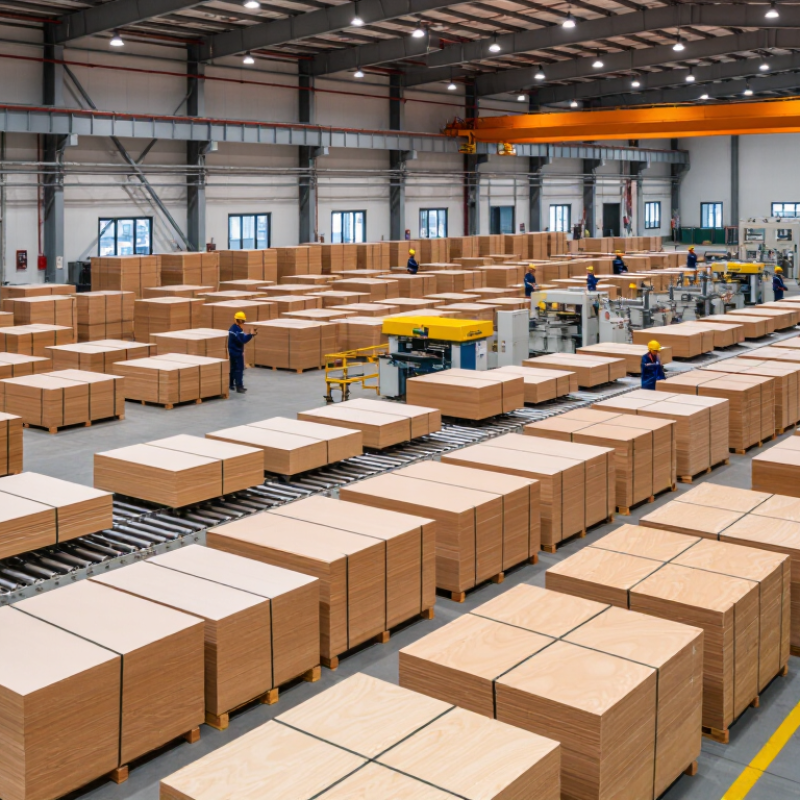
China makes birch plywood efficiently because its factories offer mature peeling, drying, pressing, sanding, and CNC-cutting capacity. FAOSTAT’s Forestry Production and Trade database consistently identifies China as the world’s leading plywood producer. The FAO/UNECE Forest Products Annual Market Review also shows China’s strong position in global wood-panel manufacturing and trade. Large ports, dense supplier clusters, and established export logistics reduce production friction. That does not guarantee every panel is excellent.
Buyers should check veneer thickness, core gaps, moisture content, bonding grade, and formaldehyde test results. EN 717-1 testing can help verify formaldehyde emissions, while FSC certification may support responsible forest sourcing. In practice, a smooth surface can hide weak inner plies. I have seen attractive samples fail after machining because the core contained voids. The label “birch plywood” is therefore incomplete evidence. Factory inspection, batch testing, and clear technical specifications matter more than appearance alone.
How to Evaluate Birch Plywood Suppliers in China
Choosing a birch plywood supplier in China requires more than comparing export prices. FAOSTAT Forestry Production and Trade data identifies China as the dominant plywood producer, supplying roughly two-thirds of global output in recent years. That scale creates options, but also uneven quality. A reliable supplier should explain birch veneer origin, core species, panel construction, moisture content, and adhesive type without hesitation.
Ask for recent test reports, not only attractive samples. ISO 12465 specifies plywood requirements, while EN 636 addresses performance for different service conditions. Reports should identify the factory, production batch, test date, and laboratory method. Check formaldehyde results against the regulations required in your destination market. A supplier avoiding traceability deserves caution.
Inspect the production line when possible. Look for calibrated hot presses, controlled veneer drying, clean storage, and consistent panel thickness. Request samples from three separate batches. Measure thickness, inspect edges, and test screw holding after conditioning. The FAO Global Forest Resources Assessment 2020 highlights the importance of responsible forest management, so ask for legal timber documentation and chain-of-custody evidence where relevant. Do not trust a polished sample alone.
Pricing needs context. A lower quote may reflect thinner veneers, weaker cores, or incomplete testing. I would compare landed cost, defect allowances, packaging, and replacement procedures. Supplier audits help, but they are not perfect. A factory can pass one inspection and still disappoint later. Keep written specifications and require pre-shipment inspection before releasing the balance.
Which Chinese Birch Plywood Suppliers Stand Out?
The Chinese birch plywood suppliers that stand out are not always the largest factories. Strong candidates usually show clear production records, stable veneer sourcing, and practical export experience. They can explain core quality, formaldehyde emissions, moisture resistance, and thickness tolerances without hiding behind vague promises.
A reliable supplier should provide recent test reports, product samples, and batch photographs. Look for birch veneers with consistent grain, tight bonding, and clean panel edges. During factory discussions, ask how glue spread, hot-press temperature, and sanding thickness are controlled. These details often reveal more than a polished catalog. Suppliers serving furniture, interiors, and packaging markets may also offer useful customization. Cut-to-size services, film options, and carefully packed pallets can reduce problems after arrival.
Communication matters just as much. A capable export team answers technical questions directly and reports delays early. That builds trust. Still, no supplier is perfect. Samples may look excellent while mass production varies slightly. I would request an independent inspection for large orders, especially when panels face humid conditions. Price deserves attention, but an unusually low quotation may signal thinner veneers, weaker adhesive, or inconsistent grading. The best Chinese suppliers stand out through traceability, honest limitations, and repeatable quality rather than impressive claims alone.
What Products and Certifications Do Top Suppliers Offer?
China’s leading birch plywood suppliers usually offer panels for furniture, cabinetry, flooring, interiors, and transport applications. Common constructions include birch core, poplar-birch combinations, hardwood face veneers, and multi-layer panels. Buyers can request BB/BB or BB/CC surface grades, calibrated thicknesses, and sanded faces. Film-faced plywood is also available for reusable concrete formwork.
FAOSTAT’s 2022 forestry statistics place China among the world’s largest wood-panel producers, with plywood output exceeding 200 million cubic metres. However, national figures combine different grades and end uses. Comparisons are not always perfect. A reliable supplier should provide technical datasheets, moisture readings, veneer thickness, bonding class, and production photographs. Small details matter.
Certification separates a capable factory from a persuasive sales file. Many established suppliers can offer FSC chain-of-custody documentation, ISO 9001 quality management, and ISO 14001 environmental management certification. For construction panels, EN 13986 documentation and CE marking may apply, depending on the intended use. Furniture buyers often request E1 formaldehyde testing, while North American projects may require CARB Phase 2 or TSCA Title VI compliance. Test reports should come from laboratories accredited to ISO/IEC 17025. Check the certificate holder, product scope, factory address, and expiry date. A certificate alone can mislead. Suppliers should also support batch inspection, veneer-core photographs, and third-party pre-shipment testing. Proof matters more.
How to Choose the Right Birch Plywood Supplier for Your Needs
Choosing a birch plywood supplier in China requires more than comparing export prices. The right partner should match your project’s thickness, grade, face quality, and delivery schedule. Ask for technical data sheets, production photos, and recent sample panels. A reliable supplier will explain veneer sources, core construction, adhesive class, and allowable thickness tolerance. Do not accept vague claims. Ask for measurable standards.
Request samples cut from normal production, not specially prepared pieces. Inspect the surface under side lighting for patches, open joints, sanding marks, and color changes. Check a panel’s edges for voids and uneven layers. For furniture, test screw holding and machining behavior. For construction applications, confirm moisture performance and certified test reports. An independent inspection before shipment can verify dimensions, packaging, and container loading. It adds cost, but one rejected shipment costs more.
Evaluate communication as carefully as the plywood. Suppliers should answer questions clearly, issue consistent quotations, and disclose lead times honestly. Confirm Incoterms, replacement terms, payment stages, and packaging details in writing. Ask how they handle claims when moisture or damage appears after arrival. Some suppliers may offer excellent samples but inconsistent bulk production. That risk is easy to overlook. I would begin with a small trial order, record every defect, and review the results with the factory before scaling up. No supplier is perfect; transparent correction matters more than polished promises.