
China Top 10 Camping Tarp Manufacturers?

China’s camping market is growing, but not every supplier deserves a place on a serious buyer’s shortlist. This guide examines China’s Top 10 Camping Tarp Manufacturers through practical criteria, including fabric quality, waterproof ratings, seam construction, production capacity, customization, and export experience.

A Camping Tarp may look simple. It is not. A poorly sealed seam can drip onto sleeping bags during a midnight storm. Weak webbing may tear when wind loads the ridgeline. Experienced manufacturers understand these details and test them before shipment. Glen Van Peski, founder of Gossamer Gear and a respected ultralight shelter designer, has expressed a useful principle: “Don’t carry what you don’t need.” For tarp buyers, the idea works differently. Choose only the features that improve protection, setup, or durability.

This ranking considers manufacturers serving wholesalers, outdoor brands, distributors, and project buyers. It also looks beyond attractive catalogs. Factory communication, sample consistency, inspection procedures, and realistic delivery schedules matter just as much. A low quotation can become expensive after coating defects, color mismatches, or delayed production appear.

No ranking is perfect. Supplier capabilities change, and public information can be incomplete. That limitation deserves attention. Buyers should request current samples, test reports, material specifications, and clear warranty terms before placing large orders. The strongest manufacturers combine dependable materials with honest communication. That combination is rare. It is also what separates a dependable Camping Tarp supplier from a factory that only sells impressive photographs.
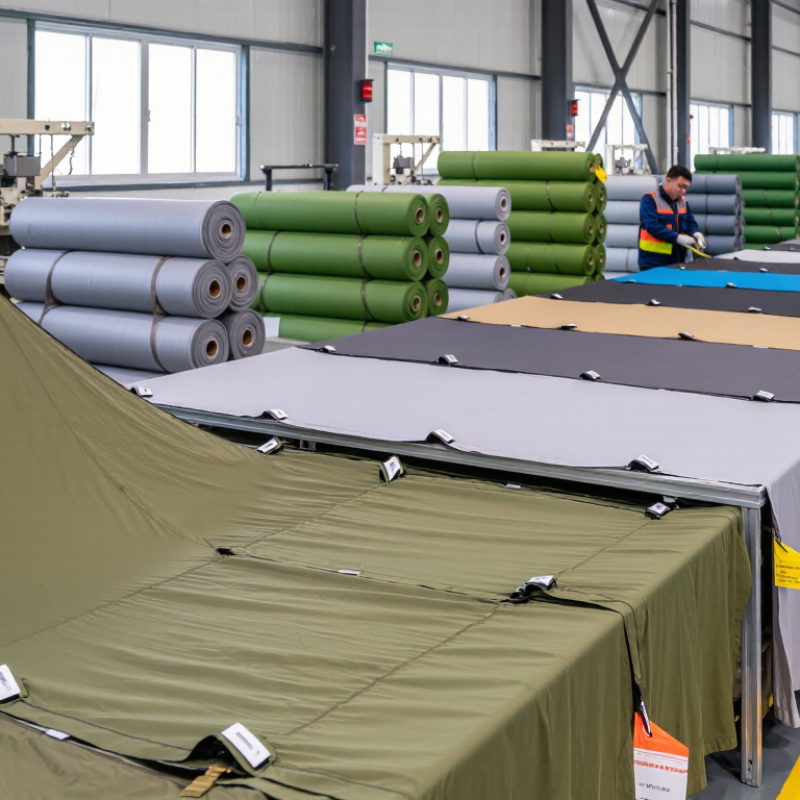
China Top 10 Camping Tarp Manufacturers?

Definition and Role of Camping Tarp Manufacturers in China

China’s camping tarp manufacturers design and produce lightweight shelters for outdoor use. Their role extends beyond cutting fabric and attaching eyelets. They select materials, develop patterns, control production, and support export compliance. The global camping equipment market was valued at about USD 19.1 billion in 2023, according to Grand View Research. This growth increases demand for practical, weather-resistant tarp systems.

A capable manufacturer normally evaluates waterproof coating, tear strength, UV resistance, seam sealing, and hardware durability. Laboratory checks may include hydrostatic pressure and tensile testing. Factory teams also inspect coating thickness, stitching density, and package dimensions. Small details matter. A poorly placed reinforcement can fail during strong wind. Experienced suppliers often provide prototypes, folding tests, color checks, and production samples before bulk manufacturing. The Outdoor Industry Association reported 57.8 million U.S. campers in 2023, showing the scale of demand for dependable outdoor equipment.

However, manufacturing quality is not always consistent. Some suppliers focus heavily on low prices and overlook long-term fabric performance. Buyers should review test records, traceability systems, material specifications, and corrective-action procedures. Communication also requires discipline. A drawing may appear clear, yet seam allowances or pole attachment points can remain uncertain. In my view, the strongest Chinese manufacturers act as engineering partners, not simple subcontractors. They improve designs through field feedback, although their testing may still need independent verification.

China Camping Tarp Manufacturers: Key Roles in Product Development

Typical technical priorities used by camping tarp manufacturers in China

Camping tarp manufacturers support outdoor brands and distributors through fabric selection, waterproof coating, reinforcement, customization, quality control, and export packaging. The chart uses a practical 100-point priority index to show how these production roles commonly contribute to a camping tarp project; it is not company-specific data.

Key Criteria for Evaluating China’s Camping Tarp Producers

China Top 10 Camping Tarp Manufacturers?

When evaluating China’s camping tarp producers, begin with material control. Check fabric weight, coating type, UV resistance, and waterproof ratings. A reliable factory should provide recent test reports, not only catalog claims. Ask for a production sample. Samples reveal details. Inspect stitching around corners, webbing strength, grommet placement, and seam sealing. A tarp may look strong while its tie-out points fail under wind.

Factory experience also matters. Review similar outdoor projects, monthly capacity, quality procedures, and worker training. Request photos or videos of cutting, coating, sewing, and final inspection. Traceable batch records can help identify defects later. Communication is another practical test. Can the supplier explain tolerances clearly? Can they respond to a small design change without confusion? Delayed answers may signal weak coordination.

Cost should never stand alone. Compare fabric specifications, packaging, inspection methods, minimum order quantities, and replacement policies. A low quote may exclude critical testing or stronger hardware. Independent inspections are useful before shipment, especially for large orders. Still, no checklist is perfect. I would keep a written sample approval and repeat key tests during production. Some factories may perform well on one order but struggle during peak season. That risk deserves honest discussion, not optimistic assumptions.

China’s Top 10 Camping Tarp Manufacturers and Their Core Strengths

China’s top ten camping tarp manufacturers are best judged by practical performance, not factory size alone. Their core strengths include coated polyester weaving, lightweight nylon, waterproof laminating, reinforced webbing, precise cutting, heat-sealed seams, custom sizing, rapid sampling, stable bulk production, and export documentation. Each capability matters in the field. A tarp may face wet grass, sharp branches, strong wind, and repeated folding.

During supplier assessments, experienced buyers should inspect fabric rolls, stitching density, corner patches, and seam-tape adhesion. Reliable factories usually provide test reports for hydrostatic pressure, tear strength, colorfastness, and UV resistance. They also explain material differences clearly. A 20D nylon tarp saves weight, while a 210D polyester tarp often tolerates rougher campsite use. There is no perfect fabric.

The strongest manufacturers support OEM development with digital patterns and physical samples. Some excel at compact trekking tarps, while others handle large family shelters or emergency-style covers.

Production teams with mature quality systems check dimensions before packing. They should also record needle marks, coating flaws, and hardware defects. This sounds basic. It is often missed.

Buyers should compare factory communication, minimum order quantities, sampling speed, and replacement policies. A low quotation can hide inconsistent coating thickness or weak guy points. I would request a rain test after folding and unfolding the sample repeatedly. Even capable manufacturers can overlook small details when deadlines become tight. A dependable supplier welcomes that scrutiny and adjusts the design with evidence.

Manufacturing Processes, Materials, and Quality Standards

China's top ten camping tarp manufacturers are best compared through factory evidence, not catalog promises. A dependable factory begins with fabric inspection. Workers check roll width, coating uniformity, pinholes, and color consistency under bright lamps. Common materials include polyester, nylon, and laminated polyethylene. Polyester resists stretching. Nylon is lighter but can absorb moisture. Polyethylene feels less refined, yet it handles rough ground well. Each choice changes weight, packed size, and service life.

During cutting, automated tables reduce uneven edges and wasted fabric. Heat sealing creates cleaner waterproof joints than ordinary stitching, although skilled stitching remains useful around webbing points. Reinforcement patches should sit beneath high-stress corners. Webbing is bartacked, not merely sewn once. I would ask for seam samples before placing a large order. Small samples expose weak thread tension quickly. Some factories report hydrostatic pressure results, but the test method may differ. That detail deserves scrutiny.

Quality control should include incoming material records, in-process inspections, and final rain testing. Inspectors can measure seam strength, coating thickness, tear resistance, and finished dimensions. A practical test uses a fully pitched tarp, steady water spray, and checks for seepage after several hours. Certifications can support trust, but they never replace physical inspection. One overlooked issue is odor from fresh coatings. It may fade, but ventilation and documented chemical controls are wiser. Manufacturing is not perfectly uniform; humidity, operator skill, and machine calibration can shift results. Reliable suppliers disclose those variations and correct them with batch records.

China Top 10 Camping Tarp Manufacturers? – Manufacturing Processes, Materials, and Quality Standards
Capability Profile Typical Product Focus Primary Tarp Materials Manufacturing Processes Common Fabric Specifications Waterproofing and Seam Construction Relevant Quality Standards and Tests Typical Customization Options
Profile 01 Ultralight trekking and backpacking tarps Silicone-coated ripstop nylon; silicone-coated polyester Computerized fabric cutting, precision sewing, bartack reinforcement, webbing attachment Typical fabrics: 20D–40D nylon or 20D–40D polyester; ripstop grid construction Factory-applied silicone coating; roll-top or reinforced seam design; seam sealing available ISO 811 hydrostatic pressure test; ISO 13934-1 tensile strength; ISO 105-B02 color fastness to light Custom dimensions, tie-out layout, guy lines, storage sack, color, printed care label
Profile 02 Three-season family and trekking shelters PU-coated polyester; PU-coated nylon; solution-dyed polyester Digital pattern cutting, lockstitch sewing, seam taping, edge binding, final inspection Typical fabrics: 68D–150D polyester; coating commonly specified by hydrostatic-pressure requirement PU coating with heat-sealed or taped seams; reinforced corner patches and webbing loops ISO 811 water penetration resistance; ISO 13937 tear strength; ASTM D751 coated-fabric testing methods Logo-free private-label packaging, multiple colorways, UV-resistant thread, accessory bundles
Profile 03 Heavy-duty camping and base-camp tarps Oxford polyester; PVC-coated polyester; heavy-duty PU-coated fabric High-strength sewing, hot-air welding for compatible coated fabrics, double-layer reinforcement Typical fabrics: 300D–600D polyester or heavier; reinforced stress points Welded or double-stitched seams; metal or polymer eyelets; perimeter webbing reinforcement ASTM D751 coating and breaking-strength procedures; ISO 811 hydrostatic pressure; dimensional inspection Custom eyelet spacing, stove-jack preparation, window panels, detachable walls, repair kits
Profile 04 Rain tarps for outdoor recreation and events PU-coated polyester; acrylic-coated polyester; PVC-coated fabric Automated cutting, ultrasonic or hot-air welding where suitable, reinforced corner fabrication Typical fabrics: 150D–500D polyester; coated fabric selected according to weather exposure Heat-sealed seams for thermoplastic coatings; taped or bound seams for sewn constructions ISO 811 water resistance; ISO 4892-3 accelerated weathering when specified; color fastness testing Large-format panels, custom branding areas without listed brand data, special hems, rope channels
Profile 05 Four-season and snow-load shelter systems High-tenacity polyester; coated nylon; laminated technical textiles CAD pattern engineering, multi-needle sewing, load-point reinforcement, seam sealing Typical fabrics: 70D–210D; higher-tenacity yarns used for exposed load-bearing panels Fully taped seams or sealed construction; reinforced ridgeline, corners, and guy-out points ISO 13934-1 tensile strength; ISO 13937 tear strength; ISO 811 water penetration; dimensional stability checks Snow skirt, adjustable guy points, reinforced ridgeline, compatible poles, ventilation openings
Profile 06 Eco-oriented camping tarps Recycled polyester; solution-dyed polyester; PFAS-free water-repellent finishes where specified Recycled-material sourcing verification, digital cutting, low-waste marker planning, standard sewing Typical fabrics: recycled 68D–300D polyester; recycled-content percentage must be documented PU or silicone-based coating selected by performance target; taped, bound, or sewn seams Global Recycled Standard may verify recycled content; REACH chemical requirements; ISO 811 water resistance Recycled packaging, product traceability documents, repairable construction, custom material declarations
Profile 07 Flame-retardant outdoor tarps and shelters FR-treated polyester; PVC-coated polyester; inherently FR technical fabrics Fabric inspection, controlled sewing, heat welding for compatible materials, batch traceability Typical fabrics: 250D–600D; flame performance depends on fabric, coating, and intended market Welded seams or flame-resistant thread and seam tape; reinforced hems and attachment points EN 13501-1 classification where applicable; NFPA 701 or ASTM E84 only when specifically required by the application FR documentation, custom shelter geometry, cable openings, ventilation panels, compliance labeling
Profile 08 Ultraviolet-resistant beach and desert tarps Solution-dyed polyester; UV-stabilized polyester; acrylic-coated outdoor fabric Solution-dye verification, precision cutting, reinforced sewing, corrosion-resistant hardware installation Typical fabrics: 150D–600D; UV resistance varies with fiber, dye system, coating, and exposure UV-resistant thread, bound hems, sealed or coated seams, reinforced guy-out points ISO 105-B02 or AATCC 16 color-fastness-to-light testing; ISO 4892-3 accelerated weathering when requested Sand pockets, reflective guy lines, adjustable poles, custom UPF-related fabric documentation
Profile 09 Modular tarp shelters and tarp-tent systems PU-coated polyester; silicone-coated nylon; mesh and solid-fabric combinations Multi-component assembly, precision alignment, zipper installation, seam taping, accessory integration Typical fabrics: 20D–210D, selected separately for canopy, floor, doors, and reinforcement zones Mixed construction: taped canopy seams, coated floor seams, bound edges, waterproof zipper protection ISO 811 water resistance; ISO 13934-1 tensile strength; ISO 13937 tear strength; zipper cycle inspection Interchangeable walls, doors, mesh panels, bathtub floors, pole sleeves, modular attachment points
Profile 10 OEM and contract-manufactured camping tarps Polyester, nylon, Oxford fabric, recycled textiles, and customer-specified coated materials Sample approval, incoming-material inspection, AQL-based production inspection, carton and packing control Fabric weight, denier, coating type, color, and finished dimensions are defined in the approved specification sheet Seam construction selected by fabric type and target water-resistance level; critical points receive added reinforcement ISO 9001 quality-management framework where certified; ISO 811, ASTM D751, tensile, tear, color, and dimensional tests as specified Custom technical files, packaging, labels, inspection plans, pre-production samples, corrective-action records
Note: These are capability-based industry profiles rather than verified company rankings. Actual performance, certifications, material composition, and test results should be confirmed through supplier documentation and independent inspection.

How to Select the Right Chinese Camping Tarp Manufacturer

Selecting among China’s top 10 camping tarp manufacturers requires more than comparing prices. Grand View Research reported that the global camping equipment market was valued at about USD 18.9 billion in 2022, with continued growth expected through 2030. This demand attracts many new suppliers. Verify factory experience, not only trading-company claims. Ask for production photos, export records, material certificates, and a live video inspection.

Fabric performance should be measurable. Request the fabric denier, coating weight, tear strength, and hydrostatic pressure result. ISO 811:2018 provides a recognized method for testing water resistance. For rainy campsites, inspect taped seams, reinforced corners, and grommets under load. A tarp may look waterproof on a sample table, yet leak after repeated folding. Small details matter.

Capacity and communication also deserve practical testing. Request a pre-production sample with your exact dimensions, color, guy points, and packaging. Check whether the supplier can maintain consistent measurements across several pieces. The 2024 Outdoor Industry Association participation report shows sustained consumer interest in outdoor recreation, but buyers still expect reliable products. A low quotation can be attractive. It can also hide weaker fabric or unstable coating quality. I would compare three samples before choosing one supplier. My judgment might still be imperfect, especially when long-term durability data is unavailable.

Article Source:

We have the largest selection of new, remanufactured and quality pre-owned office furniture in the tri-state area.  We ship nationwide with regular deliveries to Pittsburgh, Erie, Uniontown, Washington, Akron, Cleveland, Beckley, Charleston, Clarksburg, Huntington, Morgantown, Parkersburg, Wheeling, Ashland, Ironton, and Lexington.

PITTSBURGH, PA

Showroom & Corporate Offices
1 Sexton Road
Pittsburgh, PA 15136

Local: (412) 771-0760
Fax: (412) 771-0764

WHEELING, WV

By Appointment Only
Local: (304) 232-0727

CHARLESTON, WV

Showroom
125 Lakeview Drive, Suite G
Cross Lanes, WV 25313

Local: (304) 345-3773
Fax: (681) 265-9039

MORGANTOWN, WV

By Appointment Only
Local: (304) 381-9119

HOURS OF OPERATION:

MONDAY-FRIDAY: 9am-5pm
SATURDAY: By Appointment