
Why Choose the Right Door Stopper for Your Business?
A door that swings shut can interrupt a delivery, strike a trolley, or pinch fingers during a busy shift. In offices, shops, clinics, and workshops, these small interruptions can affect comfort, workflow, and the condition of doors and walls. A Door Stopper may seem like a minor purchase, but its design should match the space where it will be used.
Consider the door’s weight, floor surface, opening angle, and daily traffic. A rubber wedge may suit a quiet office, while a fixed or wall-mounted model may work better near a frequently used entrance. Check that the stopper grips without marking the floor, and that staff can position or remove it easily. Small part. Real impact. A poorly matched product can slide, create a trip concern, or fail to hold a heavy door. Even the color and visibility matter in crowded corridors.
Choosing well starts with observing how people use the doorway, not simply comparing prices. Facility teams can review installation needs, cleaning routines, and replacement access before ordering. Product descriptions and load guidance are useful, but they do not replace checking the actual door and floor. There is rarely one perfect choice for every business. That detail is easy to overlook. This guide explores the main factors behind selecting a dependable door stopper, including material, mounting style, safety, and maintenance. A careful choice can support smoother movement and reduce avoidable wear, though regular checks remain important.
Commercial Door Stopper Basics: Types, Functions, and Applications
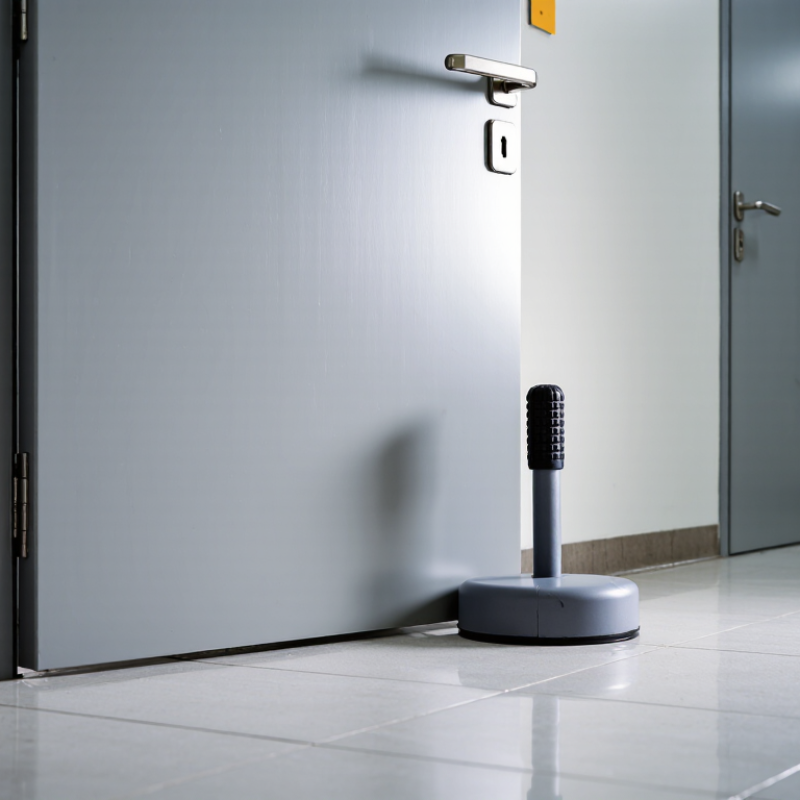
Commercial door stoppers control door movement, protect nearby surfaces, and help keep busy routes clear. The right type depends on the door’s weight, swing, floor surface, and daily use. A rubber wedge is portable and useful for temporary access, such as moving supplies. It may shift on smooth floors, though. Wall-mounted stops cushion impact near a handle or knob, while floor-mounted models can hold a door open in a fixed position. Hinge-pin stops suit some lighter interior doors, but they are not ideal for every hinge or heavy door.
Each type has a different job. A stop limits travel; a hold-open device keeps a door open. In receiving areas, a robust floor unit can help during deliveries. In offices, a wall stop may prevent handles from marking painted walls. For cleaning teams, removable wedges can be convenient. Small details matter. Check whether carts, mops, or foot traffic could catch on a floor-mounted unit, and consider how often the area is cleaned.
A practical site check beats choosing by appearance alone. Note the door’s closing force, the material beneath the stop, and whether the door must remain closed for building safety. Do not assume a door should be held open; some doors have specific safety functions. There is rarely a perfect option. A sturdy stopper can still be poorly placed, and that is easy to overlook until the wall gets dented.
Why Choose the Right Door Stopper for Your Business? — Commercial Door Stopper Basics: Types, Functions, and Applications
| Door Stopper Type | Typical Installation | Main Function | Common Business Applications | Selection Considerations |
|---|---|---|---|---|
| Wall-mounted rubber stop | Fastened to a wall behind the door | Cushions impact and helps prevent the handle or door from striking the wall | Offices, meeting rooms, corridors, and other interior spaces | Check the door swing and mounting surface; position it to meet the door before the handle contacts the wall. |
| Floor-mounted dome or low-profile stop | Anchored to the floor in the door’s swing path | Limits opening travel and can protect nearby walls or equipment | Commercial interiors where wall mounting is unsuitable | Confirm floor construction, door clearance, and trip or cart hazards before installation. |
| Kickdown door holder | Attached to the lower part of the door | A manually lowered foot holds the door open; lifting it lets the door close | Storage rooms, service areas, and doors opened temporarily | Check floor grip and clearance. The projecting foot may be unsuitable for busy routes or some accessibility needs. |
| Hinge-pin door stop | Fitted at a compatible door hinge | Adjustable arms limit how far the door opens | Light- to moderate-use interior doors where a floor or wall stop is not preferred | Verify hinge compatibility and door weight; it may not be suitable for heavy, high-impact use. |
| Overhead stop or holder | Mounted at the top of the door and frame | Controls opening travel; some models can hold the door open and release manually | Entrances and other commercial doors that need controlled opening | Match the hardware to door size, weight, and traffic level, and check the manufacturer’s installation requirements. |
| Magnetic door holder | Typically installed on the wall or floor with a matching plate on the door | Magnetic contact holds the door open until it is pulled away | Areas where staff need doors held open for routine movement or deliveries | Choose a suitable holding force and mounting location. A simple magnetic holder is not a substitute for a listed fire-door release system. |
| Electromagnetic fire-door hold-open | Installed as part of a compatible door and fire-alarm system | Holds a fire door open during normal use and releases it when activated by the designed alarm or release control | Buildings where approved fire doors need to remain open for everyday circulation | Use compatible listed equipment and have it installed and tested to applicable fire and building requirements; the door must close properly when released. |
Selection note: Consider door weight, opening frequency, floor and wall conditions, accessibility, and fire-door requirements. Applicable codes and installation requirements vary by location.