
How to Choose the Right Cold Chain Warehouse?

Choosing the right cold chain warehouse affects product quality, operating costs, and customer trust. The decision requires more than comparing rental rates or available pallet positions. A suitable facility should match your products’ temperature ranges, turnover speed, packaging, and distribution routes. Frozen goods may need -18°C storage, while chilled products often require tighter control above freezing. Small differences matter. A warm loading dock can weaken an otherwise reliable system.

Experienced warehouse managers examine temperature maps, alarm records, maintenance logs, and emergency procedures. Ask how quickly staff respond when a sensor reports a deviation. Request evidence from recent audits, calibration certificates, and power-failure drills. Reliable operators can explain their process without hiding weak points. That matters.

Visit the site if possible. Observe door discipline, air curtains, cleaning routines, pallet spacing, and forklift traffic. Check whether receiving and dispatch areas protect products during transfer. Look for continuous monitoring with secure data access, not only a wall-mounted display. Backup generators, spare refrigeration parts, and trained technicians reduce disruption risks. Yet no cold chain warehouse is flawless. Even strong facilities can face condensation, traffic delays, or unexpected equipment failure. Ask how problems were documented and corrected.

Your assessment should also consider scalability, insurance requirements, food-safety controls, and regional transport conditions. A warehouse near customers may reduce transit time, but higher rent can change the business case. Compare measured performance with promised service levels. The best choice is not always the newest building. It is the facility that consistently protects temperature-sensitive goods, communicates clearly, and improves after mistakes.
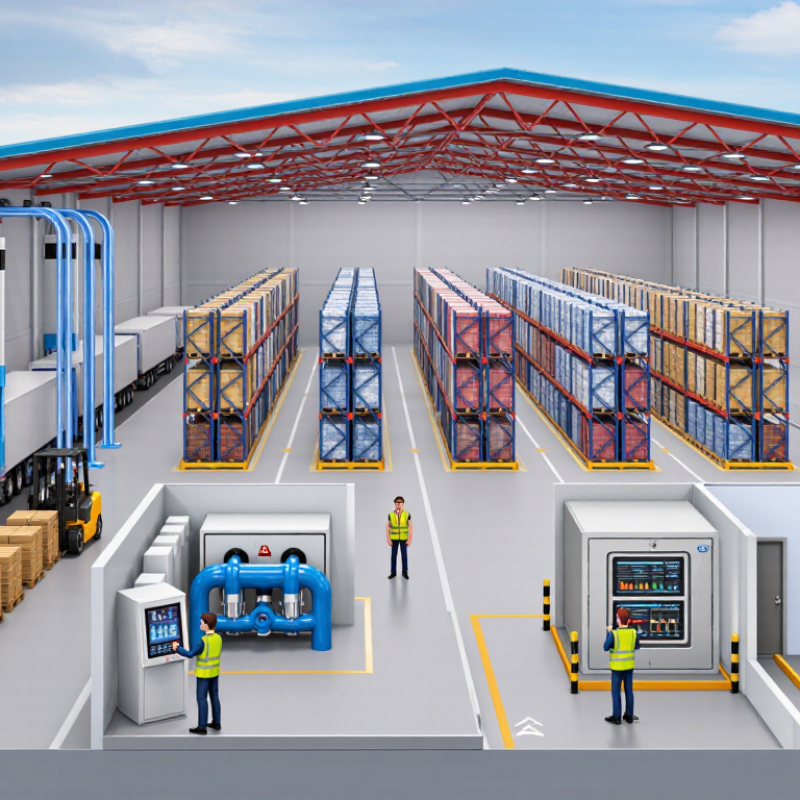
How to Choose the Right Cold Chain Warehouse?

Define Your Cold Chain Storage Requirements

How to Choose the Right Cold Chain Warehouse?

Define Your Cold Chain Storage Requirements

Choosing the right cold chain warehouse begins with the product, not the building. A warehouse is not defined by its advertised temperature. Define the required range, allowable excursions, humidity tolerance, and maximum dwell time. Fresh produce, frozen foods, and temperature-sensitive medicines require different controls. The World Health Organization recommends documented temperature mapping and continuous monitoring for time- and temperature-sensitive products. The FAO’s 2019 State of Food and Agriculture report estimates that 14% of food is lost between harvest and retail globally. Small temperature failures can become expensive waste.

Translate demand into operating numbers. Record weekly pallets, peak-season volume, pallet dimensions, arrival patterns, and expected storage days. Calculate usable cubic capacity, not total building volume. Leave room for airflow, inspection, picking, and safe circulation. Measure door openings per hour and loading-bay exposure. These details often reveal more risk than average occupancy. ASHRAE refrigeration guidance includes product heat, infiltration, people, lighting, and equipment in refrigeration load calculations. A rough estimate may understate demand during warm, busy receiving periods.

Specify temperature zones and response requirements before comparing facilities. Ask for calibration records, alarm escalation times, backup power, maintenance logs, and corrective-action procedures. Request evidence from similar operating conditions. A dashboard helps, but raw logger data matters more. The International Energy Agency identifies cooling as a major driver of electricity demand growth. Efficiency affects both operating cost and resilience.

One uncomfortable question remains: what happens when the plan is wrong? Test a failed compressor, delayed truck, and prolonged door opening. Real requirements emerge under stress.

Assess Temperature Control and Monitoring Capabilities

Choosing a cold chain warehouse requires more than checking the stated temperature range. Assess how consistently the facility controls and records conditions throughout daily operations.

Ask for temperature mapping records from storage zones, loading areas, and doorways. These areas often experience greater fluctuations. Sensors should be positioned at known warm and cold spots, not placed randomly. Use calibrated instruments with documented calibration dates and acceptable error limits. Backup sensors matter too.

Look for continuous monitoring with clear alarm thresholds and reliable data storage. Alerts should reach trained staff when temperatures drift, power fails, or doors remain open. The response process should identify who acts, what they check, and how quickly they document the event. Test this process.

During a site visit, observe a real loading cycle if possible. A warehouse may maintain stable temperatures during quiet hours but struggle when several doors open together. Review records for gaps, repeated alarms, and unexplained manual entries. These details can reveal operational weaknesses.

No monitoring system is perfect. I would question any provider showing flawless data without exceptions. Sensors can fail, doors can be left open, and staff can misunderstand alerts. The stronger facility is not the one claiming zero problems. It is the one that detects deviations, investigates causes, and improves its controls.

Compare Warehouse Location, Capacity, and Layout

How to Choose the Right Cold Chain Warehouse?

Warehouse location affects temperature control, delivery speed, and operating cost. Choose a site near major roads, ports, or production areas. However, short distance alone is not enough. Check traffic patterns, winter access, flood risk, and local utility reliability. A warehouse may look efficient on a map but lose hours at a congested loading gate. Visit the site during busy periods. That reveals problems that planning documents often miss.

Capacity should reflect usable storage, not the advertised floor area. Measure pallet positions, aisle width, ceiling height, and temperature zones. Leave space for receiving, inspection, picking, and emergency movement. Seasonal demand matters. A facility filled to 95 percent may appear profitable, but daily handling becomes slow and unsafe. I once underestimated packaging space in a capacity plan. The calculation was accurate, but the operation was not. That mistake changed how I review storage proposals.

Layout should support a clear product flow. Receiving docks should connect logically with inspection and cold rooms. Frequently moved products should stay near picking areas. Separate chilled, frozen, and ambient zones where required. Keep doors closed with suitable airlocks or rapid-opening systems. Place temperature sensors where warm spots may develop, not only beside cooling equipment. Draw the movement path on paper. If workers repeatedly cross the same aisle, the layout needs another review. A practical trial with sample pallets can expose issues before construction begins.

How to Choose the Right Cold Chain Warehouse? - Compare Warehouse Location, Capacity, and Layout

Evaluation Area Key Metric Urban Infill Site Regional Distribution Hub Port or Airport-Adjacent Site Selection Guidance
Location Distance to main customer cluster Usually within 0–50 km Usually 50–250 km May exceed 250 km for inland customers Choose the shortest practical route when delivery speed and product shelf life are critical.
Access to major roads Good for local delivery; possible congestion Usually strong highway access Strong freight access; possible port or airport delays Evaluate travel-time reliability, not only geographic distance.
Utility and power resilience Check urban grid capacity and backup power Check substation capacity and generator space Confirm grid priority, fuel access, and backup systems Cold storage depends on continuous refrigeration; verify emergency power before signing.
Local regulations and permits Potentially restrictive zoning and operating-hour rules Generally more suitable for 24-hour logistics May require food, customs, or security approvals Confirm land use, food safety, wastewater, noise, and vehicle access requirements.
Best operating model Fast last-mile replenishment Multi-region inventory consolidation Import, export, and cross-border distribution Match the site to order frequency, transport mode, and required delivery window.
Capacity Temperature zones Common zones include chilled: approximately 0–5°C; frozen: typically −18°C or below; and ambient: generally above 5°C, subject to product specifications. Separate zones reduce temperature excursions and prevent incompatible products from sharing the same space.
Required pallet positions Typically 500–5,000 positions Typically 5,000–30,000 positions Typically 10,000–50,000+ positions Use forecast peak inventory rather than average inventory when sizing the facility.
Peak-season utilization target Plan for approximately 80–85% maximum storage utilization to preserve receiving, replenishment, and picking capacity. A warehouse operating near 100% occupancy may have insufficient space for safe and efficient handling.
Vertical clearance Often 6–10 m clear height Often 10–14 m clear height Often 10–14 m or more, subject to automation design Higher clearance can increase pallet density, but the rack, sprinkler, and refrigeration design must be compatible.
Dock capacity Approximately 2–6 dock doors Approximately 6–20 dock doors Approximately 10–30 dock doors Size doors against peak hourly arrivals, unloading time, trailer dwell time, and separation of inbound and outbound flows.
Expansion potential Usually limited by land and neighboring properties Often supports phased expansion May support large-scale expansion if land and permits are available Reserve space for additional chambers, docks, utilities, and truck circulation before construction begins.
Layout Product flow Short travel paths; suitable for high-frequency local orders Linear receiving-to-storage-to-shipping flow Dedicated import, inspection, staging, and export flows Avoid crossing paths between receiving, picking, returns, waste, and dispatch.
Inbound and outbound dock separation May share dock space because of limited footprint Prefer separate inbound and outbound areas Separate docks and security-controlled staging are preferred Physical separation lowers congestion and reduces handling errors.
Temperature-controlled dock areas Small enclosed staging area Dedicated chilled and frozen marshalling areas Multiple temperature-controlled staging zones Use enclosed docks or air-locks to reduce exposure during loading and unloading.
Storage method Selective racking and floor staging Selective, drive-in, or high-density pallet racking High-density racking, shuttle systems, or automated storage Selectivity is more important for many SKUs; density is more important for high-volume, low-SKU inventory.
FEFO capability Manual lot and expiry control Warehouse management system with barcode scanning Integrated warehouse management, automation, and real-time traceability First-expired, first-out handling is essential for products with defined shelf lives.
Sanitation and segregation Dedicated cleaning and waste area may be compact Separate allergen, damaged-goods, and waste zones Controlled inspection, quarantine, and rejected-load areas Segregate products by temperature, allergen risk, quality status, and regulatory status.
Recommended layout priority Speed and accessibility Balanced flow and scalable capacity Throughput, traceability, and cargo segregation Choose the layout that minimizes touches, temperature exposure, and unnecessary travel.
Practical decision rule: Select the warehouse that meets peak demand, temperature-control requirements, regulatory obligations, and future expansion needs while maintaining reliable transport access and a one-way product flow.

Verify Compliance, Safety, and Product Handling Standards

How to Choose the Right Cold Chain Warehouse?

Compliance begins with measurable controls, not attractive storage space. The U.S. FDA Food Code 2022 recommends keeping cold food at 5°C or below. Ask for recent temperature-mapping records across shelves, corners, doors, and loading areas. Request calibration certificates for probes and data loggers. The World Health Organization estimates that up to 50% of vaccines may be wasted because of temperature, logistics, and related failures. That figure should make every warehouse tour more careful.

Safety depends on daily behavior. Check dock seals, alarms, backup power, fire systems, and restricted access. Watch how workers receive a warm pallet. Does it enter quarantine, or go directly into inventory? Review cleaning schedules, pest-control records, incident reports, and corrective actions. A dashboard can look perfect while one open dock door damages a pallet. I have found that small procedural gaps often matter more than expensive equipment. The records may also be incomplete. That deserves honest discussion.

Tips: Ask for 12 months of excursion data, not selected screenshots. Test an alarm during your visit. Confirm response times and escalation contacts. Check whether staff understand product-specific limits. Do not rely only on certifications; walk the floor and observe handling. A warehouse can meet a standard on paper and still need improvement.

How to Choose the Right Cold Chain Warehouse?

Compare the warehouse’s validated temperature zones, monitoring systems, alarm response, and product-handling procedures with the reference storage bands below.

Reference ranges: frozen foods at −18°C or below, chilled foods at 0–5°C, refrigerated vaccines at 2–8°C, and controlled room temperature products at 20–25°C. Actual requirements must be confirmed against the product label, applicable regulations, and validated handling procedures.

Reference sources: Codex Alimentarius CXC 8-1976, FDA Food Code 2022, and CDC vaccine storage guidance.

Evaluate Costs, Services, and Operational Reliability

How to Choose the Right Cold Chain Warehouse?

Price is only the starting point. Compare storage fees, handling charges, pallet movements, energy surcharges, and minimum monthly commitments. A cheap rate can become expensive after relabeling, urgent loading, or rejected deliveries. FAO’s State of Food and Agriculture 2019 estimates that 14% of food is lost between harvest and wholesale. Reliable temperature control protects both inventory and margin.

Ask for evidence, not promises. Review temperature logs, calibration records, alarm response times, backup power tests, and maintenance schedules. A strong warehouse should offer clear service-level agreements, real-time visibility, trained staff, and documented escalation procedures. UNEP’s 2023 Global Cooling Watch reports that cooling demand could more than triple by 2050. Energy efficiency will increasingly affect operating costs. I would still inspect the facility personally. A spreadsheet cannot reveal condensation near a loading door.

Tips: Request twelve months of temperature data. Check readings during loading. Confirm whether charges include after-hours access. Test the customer-support number. Ask how quickly a failed sensor is replaced. Also, compare service performance during peak seasons, not only quiet weeks. The best choice may not have the lowest quote. It should provide predictable costs, controlled temperatures, and measurable recovery when something goes wrong.

Article Source:

We have the largest selection of new, remanufactured and quality pre-owned office furniture in the tri-state area.  We ship nationwide with regular deliveries to Pittsburgh, Erie, Uniontown, Washington, Akron, Cleveland, Beckley, Charleston, Clarksburg, Huntington, Morgantown, Parkersburg, Wheeling, Ashland, Ironton, and Lexington.

PITTSBURGH, PA

Showroom & Corporate Offices
1 Sexton Road
Pittsburgh, PA 15136

Local: (412) 771-0760
Fax: (412) 771-0764

WHEELING, WV

By Appointment Only
Local: (304) 232-0727

CHARLESTON, WV

Showroom
125 Lakeview Drive, Suite G
Cross Lanes, WV 25313

Local: (304) 345-3773
Fax: (681) 265-9039

MORGANTOWN, WV

By Appointment Only
Local: (304) 381-9119

HOURS OF OPERATION:

MONDAY-FRIDAY: 9am-5pm
SATURDAY: By Appointment