
How to Choose the Best Boys Leather Shoes

Choosing Boys Leather Shoes is about more than finding a smart finish. The right pair should fit the child’s feet, suit the occasion, and feel comfortable through an ordinary day. A polished shoe can look excellent on a shelf but still pinch at the toes or rub at the heel. Fit matters most.

This guide explains how to compare leather types, construction, soles, and closures without relying on appearance alone. Check both feet while the child is standing, with the socks they will usually wear. Leave a little room in front of the longest toe, and look for a secure heel that does not slip with each step. Small details count.

We will also consider where the shoes will be worn, from school corridors to family events, and how much care the leather may need. Smooth leather is often easy to wipe clean, while textured finishes can hide everyday marks. Still, no material stays pristine without attention. That is easy to forget.

Price, durability, and comfort should be weighed together. A higher price does not guarantee a better fit, and a stiff shoe may need time to soften—but discomfort should not be dismissed as a normal break-in stage. Children’s feet grow, too, so a good fit today may not last all season. Use these practical checks to make a confident choice, then reassess as the shoes are worn.
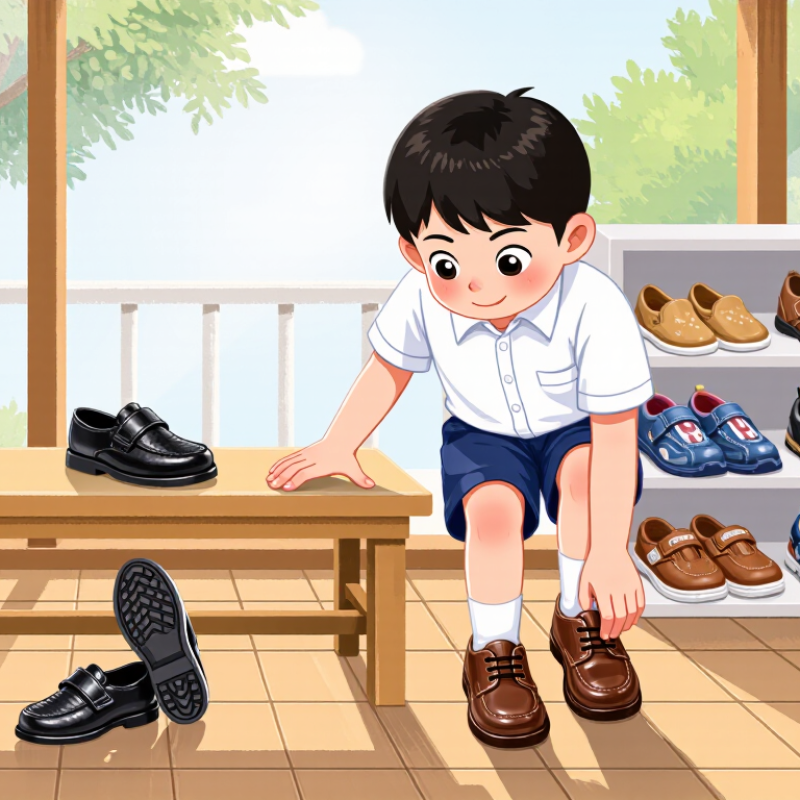
How to Choose the Best Boys Leather Shoes

Identify the Shoe's Intended Use and Expected Conditions

Before choosing boys’ leather shoes, picture a real week: classroom floors, playground gravel, rainy walks, or a family event. A smooth leather sole may suit indoor wear and dry sidewalks, but can feel slippery on wet surfaces. For daily outdoor use, look for a grippy sole, secure fastening, and leather that can be cleaned without harsh treatment. No shoe handles every condition equally well. That distinction matters.

Fit deserves the same attention as durability. A review in the Journal of Foot and Ankle Research found that studies commonly reported ill-fitting footwear among children, with some estimates reaching 72%. Treat that figure as a warning, not a prediction for every child. Check both feet while he stands, wearing his usual socks. Leave roughly a thumb’s width in front of the longest toe, and make sure the heel does not slip. A soft upper should bend near the toes, not collapse through the middle. Small details count.

Recheck fit every few months, especially during growth spurts. Evening checks can help, since feet may swell slightly during the day. That method is useful, not perfect. If the shoe pinches after a short walk, do not expect it to “break in” safely. A polished finish is easy to notice; pressure marks after wear are more informative.

Measure the Child's Feet and Assess Fit

Measure both feet while the child is standing, wearing the socks intended for the shoes. Feet may differ slightly in length, so use the larger measurement. Place each foot on paper and mark the heel and longest toe without pressing down. Measure from heel to mark with a ruler. Late afternoon can be useful, since feet often swell a little during the day. Small detail, big difference.

Try the shoes on both feet and ask the child to stand and walk. There should be a little room at the toe, roughly a finger’s width, but the foot should not slide forward. Check that the widest part of the foot sits comfortably and the heel stays mostly in place. Watch for pinching, red marks, or a child curling their toes. Leather may soften with wear, but it should not need to hurt first.

Children sometimes wiggle during measuring. It happens. Repeat the measurement if the marks look uncertain, and compare them with the shoe’s fit rather than relying on the printed size alone. A careful check is not perfect, either; different shoe shapes can feel different on the same foot. Recheck fit as the child grows, especially if shoes suddenly feel tight or walking seems uncomfortable.

Compare Leather Types, Linings, and Construction

When comparing boys’ leather shoes, look beyond the shine. Full-grain leather often develops creases and marks with wear, while corrected-grain leather has a more even surface and can be easier to wipe clean. Suede feels softer, but dirt may show quickly and brushing becomes part of its care. Feel the difference. A supple upper is comfortable, yet softness alone does not prove that a shoe will hold its shape.

Check the lining where the foot gets warm: around the heel and beneath the tongue. Leather linings can feel smooth and may absorb some moisture, but they still need time to air out. Textile linings can dry faster and often feel lighter. Run a finger along seams and edges; rough stitching can rub a child’s heel, even when the outside looks polished. Small details matter.

Construction affects how the shoe moves and wears. Flex the forefoot gently; it should bend near the toes rather than folding through the middle. A stitched sole may be repairable, depending on its design, while a cemented sole can keep a shoe lighter and flexible. Neither method guarantees better quality. Check that the sole is firmly attached, then have the child walk on a clean floor. Watch for slipping heels or toes pressing against the front. Fit is easy to misjudge when a child is standing still.

Evaluate Soles, Fastenings, and Practical Features

A good sole should bend at the ball of the foot, not fold in half. Check the tread for shallow, even grooves and press the heel against a firm surface; a sole that twists too easily may feel unstable. ASTM International’s F2913-19 test method measures footwear friction on flooring, a useful reminder that grip depends on the shoe-floor combination. Deep tread alone does not guarantee traction. APICCAPS’ World Footwear Yearbook 2024 estimates global footwear production reached 22.4 billion pairs in 2023. At that scale, a “leather” label tells little about sole quality or construction. Ask how the outsole is attached, and look for smooth seams without gaps.

Fastenings should hold the heel without making mornings difficult. Laces allow small fit adjustments, but young children may struggle to tie them; hook-and-loop straps are quicker, though they can lose grip as the fastening wears. Check both shoes with the child standing: toes should move freely, and the heel should not lift with each step. Feel inside for raised seams or rough edges that could rub against socks. Leather can soften with wear, but it will not fix a poor fit. I would not choose a shoe by appearance alone; a polished finish can hide a stiff sole. Try it on near the end of the day, when feet may be slightly larger. Small detail, big difference.

Balance Comfort, Durability, Style, and Cost

How to Choose the Best Boys Leather Shoes

Comfort, durability, style, and cost all matter, but the right balance depends on how the shoes will be worn. Try them on late in the day, when feet may be slightly larger. There should be about a finger’s width of space at the toe, without the heel slipping as he walks. Watch him take a few steps. A stiff shoe that pinches now is unlikely to feel better after a week. The sole should bend near the ball of the foot, not fold in half. Sizing guides can help, but they cannot account for every foot shape.

For durability, inspect the stitching, sole attachment, and lining, then check whether the leather feels flexible rather than brittle. A simple finish may show scuffs, yet often cleans up with a damp cloth and suitable leather conditioner. That takes care. A highly polished style may suit school events, while a softer, less formal pair can handle regular wear. Consider cost per use, not just the price tag: a well-fitting pair worn often may be better value than an expensive pair saved for rare occasions. Still, children’s feet grow quickly, so paying more does not guarantee longer use. Leave room for growth, but not so much that he trips on the way to class.

We have the largest selection of new, remanufactured and quality pre-owned office furniture in the tri-state area.  We ship nationwide with regular deliveries to Pittsburgh, Erie, Uniontown, Washington, Akron, Cleveland, Beckley, Charleston, Clarksburg, Huntington, Morgantown, Parkersburg, Wheeling, Ashland, Ironton, and Lexington.

PITTSBURGH, PA

Showroom & Corporate Offices
1 Sexton Road
Pittsburgh, PA 15136

Local: (412) 771-0760
Fax: (412) 771-0764

WHEELING, WV

By Appointment Only
Local: (304) 232-0727

CHARLESTON, WV

Showroom
125 Lakeview Drive, Suite G
Cross Lanes, WV 25313

Local: (304) 345-3773
Fax: (681) 265-9039

MORGANTOWN, WV

By Appointment Only
Local: (304) 381-9119

HOURS OF OPERATION:

MONDAY-FRIDAY: 9am-5pm
SATURDAY: By Appointment