
How to Choose the Best Baseball Shirt for Your Team?

Choosing the best Baseball Shirt for your team involves more than matching colors and adding a logo. The right shirt should support movement, comfort, team identity, and repeated washing. Players notice small problems quickly. A tight shoulder can restrict a throw. Heavy fabric can feel uncomfortable during a humid afternoon game. Rough seams may distract a player before an important at-bat.

Start with the playing environment. Lightweight polyester usually dries faster than cotton and handles regular use well. However, fabric quality differs between suppliers. Check breathability, stretch, color consistency, and stitching before placing a large order. Ask for a sample and inspect it under real conditions. Let a player wear it while throwing, sliding, and warming up. A shirt that looks excellent online may fit poorly on the field. It happens.

Sizing also deserves careful attention. Compare the supplier’s measurements with a shirt your players already wear. Do not rely only on small, medium, or large labels. Include room for protective equipment without creating loose fabric that catches during play. Coaches, parents, and players should review the design together. Their feedback can reveal practical concerns that a designer might miss. Keep sponsor marks and numbers clear, readable, and balanced. Confirm production timelines, printing methods, return policies, and care instructions in writing. Reliable suppliers explain these details before payment, not after problems appear. The final choice should combine tested performance, honest communication, and a design players feel proud to wear. It may not be perfect. A thoughtful review process makes costly mistakes less likely.
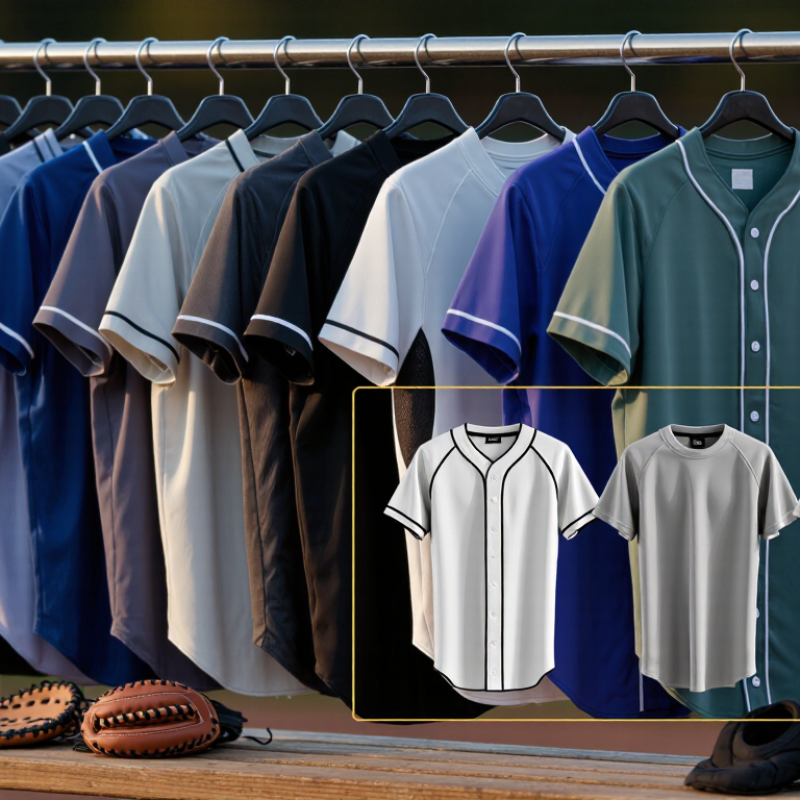
How to Choose the Best Baseball Shirt for Your Team?

Define Your Team’s Baseball Shirt Needs

Before choosing a baseball shirt, define how your team will actually use it. Will players wear it during humid summer games, cool evening practices, or both? Climate affects fabric weight, breathability, and sleeve length. A lightweight polyester blend can dry quickly, while a denser shirt may feel better in cooler weather. Ask players about comfort, too. A shirt that looks sharp but traps heat will not perform well after seven innings.

Fit needs careful attention. Measure chest, shoulder, and sleeve areas instead of relying only on small, medium, or large labels. Players need enough room for throwing, sliding, and wearing protective equipment. Check whether the collar feels tight and whether the hem stays tucked during movement. I once focused too much on appearance and underestimated sleeve comfort. That mistake changed our fitting process. Not every player has the same build.

Think about durability and care before ordering. Frequent washing can weaken poorly finished seams, fade colors, or damage printed numbers. Request a sample and test it through one practice, one wash, and a full range of movements. Record what works and what does not. Set a realistic budget that includes shirts, customization, replacements, and possible size exchanges. Leave room for mistakes. Rosters change, and children grow quickly. A clear size chart, flexible order plan, and written care instructions can prevent avoidable problems.

Compare Shirt Fabrics, Fits, and Weather Performance

How to Choose the Best Baseball Shirt for Your Team?

Fabric affects comfort, movement, and performance during every inning. Lightweight polyester usually dries quickly after sweat or light rain. A cotton blend feels softer, but it can become heavy when wet. Mesh panels under the arms improve airflow on hot afternoons. I have found that fabric weight matters more than a smooth finish. A shirt that feels cool indoors may trap heat under direct sun. Test samples outdoors before ordering the full team set.

Fit should support a natural throwing motion without pulling across the shoulders. Players need enough room to slide, bend, and raise both arms. However, an oversized shirt can catch wind and look untidy. Check sleeve length carefully. Sleeves should not cover the elbow during a throw. For colder games, leave space for a thin base layer. Weather changes quickly, especially during evening matches. A breathable long-sleeve option may work better than one thick shirt.

Tips: Ask players to move, stretch, and swing while wearing samples. Check sweat marks after practice. Choose lighter fabric for humid climates. Add a thin layer for cool weather. Do not trust appearance alone. One mistake is choosing the softest fabric without testing its drying speed. Also, sizing charts can be unreliable. Measure actual players, not just an old team shirt.

Choose Team Colors, Designs, and Custom Details

How to Choose the Best Baseball Shirt for Your Team?

Team colors should be clear from the stands. Choose one dominant color and one supporting shade. Strong contrast helps players recognize teammates quickly. Dark sleeves can hide dirt during long games. Light panels may feel cooler in bright weather. Test fabric swatches outdoors before approving the final color. Indoor lighting can be misleading. I have seen navy look almost black under stadium lights.

A useful design reflects your team without becoming noisy. Keep the front logo readable from several meters away. Use simple numbers with generous spacing. Add player names only when the back has enough room. Sleeve stripes can create movement, but too many lines may distract. Our first draft once looked sharp on a screen. It felt crowded when printed. That mistake changed how we review artwork. Print a sample at actual size. Small details often disappear.

Custom details should support comfort and team identity. Check the collar before choosing a decorative trim. A tight neckline can bother players during repeated sprints. Reinforced seams matter around the shoulders and underarms. Ask players to stretch, swing, and raise both arms during fitting. One shirt will not suit every body shape. Consider separate cuts when budgets and ordering rules allow. Include a clear size chart and confirm measurements twice. Names and numbers still need careful proofreading. A single wrong digit creates needless disappointment. Leave space for future replacements. That part is easy to overlook.

Check Sizing, Comfort, Durability, and Maintenance

How to Choose the Best Baseball Shirt for Your Team?

Sizing should begin with real measurements, not guessed jersey numbers. Measure chest, shoulder width, and shirt length while wearing a thin training layer. The 2023–24 NFHS High School Athletics Participation Survey recorded more than 478,000 baseball participants in the United States. That scale makes consistent sizing important. Order a sample in every planned size. Ask players to swing, slide, and raise both arms. A shirt that fits standing may restrict movement during a hard throw. I have seen teams choose a looser cut, then regret the extra fabric around the wrists.

Comfort depends on fabric weight, airflow, and seam placement. The 2024 Textile Exchange Materials Market Report estimated polyester represented about 57% of global fiber production in 2023. Polyester can dry quickly, but fabric quality and construction still matter. Look for breathable panels, smooth inner seams, and labels that do not scratch. Test the shirt under direct sunlight and during a full practice. Small details become obvious after two sweaty innings.

Durability needs evidence. Ask for abrasion, colorfastness, and shrinkage testing, preferably using recognized textile methods such as AATCC procedures. Inspect stitching near the shoulders and side seams. Double-needle seams usually handle repeated motion better than weak single rows. Maintenance instructions should allow cold washing, prompt drying, and limited high heat. Follow them carefully. Hot dryers can shorten a shirt’s useful life, even when the fabric feels strong. Teams often overlook this part. That mistake is expensive.

How to Choose the Best Baseball Shirt for Your Team? — Check Sizing, Comfort, Durability, and Maintenance

Selection Dimension What to Check Recommended Standard Why It Matters Practical Team Recommendation
Sizing and Fit Chest, shoulder, sleeve, and body measurements; intended underlayer; range of motion Compare each player’s measurements with the garment’s size chart instead of relying only on age or usual size. Allow enough room for a base layer without excessive fabric. A correct fit helps prevent pulling across the shoulders and reduces interference during throwing, batting, and sliding. Use individual measurements
Cut and Mobility Armhole shape, sleeve length, side panels, hem length, and stretch Choose a cut that permits full overhead arm movement and torso rotation. A slightly longer back hem can improve coverage during active play. Baseball requires repeated shoulder rotation, quick movement, and frequent changes in body position. Prioritize unrestricted movement
Fabric Composition Fiber content, fabric weight, breathability, and moisture management Polyester or polyester-blend fabrics are commonly selected for team uniforms because they dry quickly and retain shape. A lighter fabric is generally more comfortable in warm conditions. Quick-drying materials can help manage perspiration and reduce the discomfort of a wet garment. Lightweight performance fabric
Comfort Fabric softness, seam placement, collar construction, labels, and ventilation Look for smooth seams, a non-restrictive collar, low-irritation labels, and breathable areas such as mesh side panels when appropriate. Comfort becomes increasingly important during long practices, tournaments, and hot-weather games. Test before ordering in bulk
Durability Stitch density, reinforced seams, fabric resistance, collar recovery, and color stability Inspect stress points at the shoulders, underarms, side seams, and hem. Double-needle or reinforced stitching is useful in areas exposed to repeated movement. Frequent washing, contact with equipment, and sliding can place substantial stress on a baseball shirt. Inspect construction details
Decoration Method Screen printing, heat-applied graphics, embroidery, or sewn decoration Choose a decoration method suitable for the fabric and expected washing frequency. Large heavy embroidery may reduce flexibility and add weight. Decoration affects comfort, durability, garment weight, and how the shirt should be washed. Match decoration to use
Color and Visibility Color consistency, contrast, player-number readability, and resistance to fading Select colors that provide clear contrast between the shirt, numbers, names, and trim. Confirm that the same color standard can be reproduced for future replacements. Readable numbers support identification, while consistent colors help maintain a unified team appearance. Check a physical sample
Washability Care label instructions, water temperature, drying method, and stain treatment Follow the care label. In general, wash performance shirts inside out with similar colors, use a mild detergent, and avoid chlorine bleach unless specifically permitted. Correct washing helps protect fabric performance, colors, seams, and printed graphics. Use a consistent team-care guide
Drying and Storage Heat exposure, airflow, folding, hanging, and post-game care Air-dry when possible and avoid unnecessary high heat, which can affect synthetic fibers and some graphics. Store shirts clean and completely dry. Prompt drying helps limit odor buildup and reduces avoidable wear caused by heat or damp storage. Air-dry and store dry
Fit Consistency Sample sizing, measurement tolerance, replacement availability, and order records Approve a sample before placing the full order and retain the size chart, measurements, color references, and decoration specifications. Documented specifications make replacements more consistent throughout the season. Approve one sample first
Best Overall Choice Balance of fit, mobility, comfort, durability, appearance, and care requirements A well-fitting, breathable, quick-drying shirt with reinforced stress points, secure decoration, clear numbering, and straightforward care instructions. The best team shirt is not defined by one feature; it should perform reliably throughout practices, games, and repeated washing. Balance performance and care
Team Buying Tip: Request a physical sample, test the shirt through throwing and batting movements, and wash it according to the intended care routine before approving a large team order.

Evaluate Suppliers, Pricing, and Order Timelines

Choosing the best baseball shirt starts with a supplier who understands team use, not only catalog photos. Ask for fabric weight, moisture control, stitching details, size charts, and decoration methods. Samples matter. Wear one during practice, then inspect the seams, collar, and printed numbers after washing.

Pricing should be judged by total cost. Request a written quote covering shirts, artwork, setup fees, packaging, shipping, and taxes where applicable. A low unit price can become expensive when revisions or replacements appear. I once accepted an attractive quote without checking size-based pricing. The final invoice was higher, and the budget became uncomfortable. That mistake taught me to compare identical specifications from at least three suppliers.

Order timelines need more attention than most teams expect. Confirm sample approval dates, production time, quality checks, and delivery estimates in writing. Leave extra days for tournament schedules, especially during busy seasons. Ask how the supplier handles defective shirts or missing sizes. A dependable supplier should answer clearly and provide realistic dates, not vague promises. Still, even a careful plan can slip because of fabric shortages or shipping delays. Recheck the timeline after approving the sample. Keep a small reserve of replacement shirts for late changes, growing players, or unexpected damage. I would also question whether every custom detail improves team identity, because complicated designs can slow production and increase costs.

We have the largest selection of new, remanufactured and quality pre-owned office furniture in the tri-state area.  We ship nationwide with regular deliveries to Pittsburgh, Erie, Uniontown, Washington, Akron, Cleveland, Beckley, Charleston, Clarksburg, Huntington, Morgantown, Parkersburg, Wheeling, Ashland, Ironton, and Lexington.

PITTSBURGH, PA

Showroom & Corporate Offices
1 Sexton Road
Pittsburgh, PA 15136

Local: (412) 771-0760
Fax: (412) 771-0764

WHEELING, WV

By Appointment Only
Local: (304) 232-0727

CHARLESTON, WV

Showroom
125 Lakeview Drive, Suite G
Cross Lanes, WV 25313

Local: (304) 345-3773
Fax: (681) 265-9039

MORGANTOWN, WV

By Appointment Only
Local: (304) 381-9119

HOURS OF OPERATION:

MONDAY-FRIDAY: 9am-5pm
SATURDAY: By Appointment