
How to Choose Kids Dress Leather Shoes in 2026?

Choosing Kids Dress Leather Shoes in 2026 takes more than matching a polished shoe to a special occasion. Children’s feet change quickly, while stiff soles, narrow toe boxes, and slippery floors can make a handsome pair uncomfortable. Small details matter. Check the fit with the child standing: toes should have room to move, the heel should stay secure, and the shoe should bend near the ball of the foot. Leather quality matters, too, but a soft lining and comfortable fit are more useful than a glossy finish alone.

Market research from Grand View Research and Euromonitor International tracks growth and changing preferences across children’s footwear. Those reports help explain why dress styles, materials, and retail choices keep evolving; they do not establish that one shoe is best for every child. For fit and foot-health considerations, consult guidance from the American Podiatric Medical Association and qualified pediatric foot-care professionals. Biomechanics researcher and podiatrist Dr. Kevin Kirby’s work offers a useful reminder: footwear design affects how the foot functions. That is a principle, not a substitute for an individual fitting. A careful check in the store can still miss a pressure point that appears after an hour of walking. This guide weighs style against comfort, construction, and practical wear, while recognizing that children’s needs differ. The best choice may be less elegant than expected. Comfort comes first.
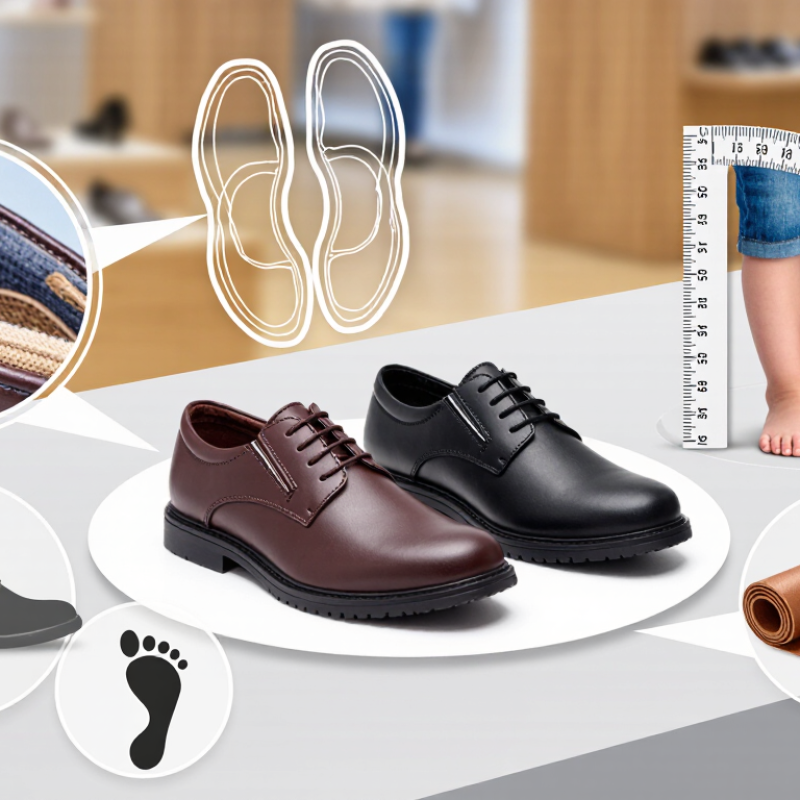
How to Choose Kids Dress Leather Shoes in 2026?

Define the Occasion, Dress Code, and Daily-Wear Requirements

For a wedding, school ceremony, or family photograph, choose polished leather shoes that match the stated dress code and stay comfortable through standing and walking. A glossy finish looks formal, while a softer, less shiny finish suits everyday uniforms. Think about the whole day, not only the first hour. The World Health Organization’s 2020 guidelines recommend an average of at least 60 minutes of moderate-to-vigorous activity daily for children aged 5–17. That makes flexibility and secure fastening practical priorities, even for dress shoes.

For daily wear, check that the heel stays in place, the sole bends near the toes, and there is room for toes to spread. A 2018 systematic review in the Journal of Foot and Ankle Research reported that 63–72% of children in the included studies wore ill-fitting shoes; that range is a warning, not a universal rate. Measure both feet while the child is standing, preferably later in the day, and try shoes with the socks they will wear. Walk around the shop. Watch for heel slipping, toe pressure, or a child changing their stride. “They’ll break in” is not a fit test. I still find appearance can sway the decision too much; a beautiful shoe is a poor choice if a child avoids wearing it.

How to Choose Kids Dress Leather Shoes in 2026? - Define the Occasion, Dress Code, and Daily-Wear Requirements

Occasion Typical Dress Code Wear Requirements Useful Shoe Features Fit and Practical Checks Care Notes
Weddings and formal celebrations Smart or formal clothing; polished shoes are usually appropriate. Occasional wear, often for several hours of standing, walking, and sitting. Smooth leather upper, secure lace-up or buckle fastening, and a flexible sole. Try shoes on with the socks the child will wear. Check toe room while standing and make sure the heel does not slip excessively. Wipe off dust after use and allow shoes to air-dry naturally if they become damp.
School uniform or dress-code days Follow the school’s rules for colour, style, and fastening. Frequent use, including walking between classes and everyday school activities. Durable construction, a comfortable lining, a secure fastening, and a grippy, flexible outsole. Check fit regularly as children grow. The shoe should feel secure without pinching or rubbing. Choose a finish that is easy to wipe clean. Check school guidance before buying a style with decorative details.
Family gatherings and dinners Smart casual; a polished appearance without highly formal styling. Short to medium periods of wear, usually indoors with some walking. Lightweight leather shoes with a padded collar and an outsole that bends comfortably at the forefoot. Have the child walk in both shoes and check for rubbing at the heel, toes, and sides of the foot. Use a soft cloth for routine cleaning. Follow the shoe maker’s care instructions for leather products.
Performances, ceremonies, and photographs Often formal; confirm any required colours or matching outfit details in advance. May involve standing for a long time, with limited opportunity to change shoes. Secure fastening and a stable, low heel; avoid unnecessarily stiff or heavy styles. Break in new shoes with short periods of indoor wear before the event, and check for pressure points. Polish or clean in advance, following the product instructions; test care products on a discreet area first.
Smart everyday wear Neat casual clothing or settings that call for a more polished look. Regular use with more walking than a one-off formal event. Comfortable lining, flexible construction, a securely attached outsole, and a practical fastening. Prioritize comfort and secure fit over appearance. Recheck fit as the child grows or if the shoes start to rub. Leather is not automatically waterproof. Protect shoes from prolonged rain and dry them away from direct heat.
Outdoor events in changeable weather Smart or formal clothing, with conditions that may include wet or uneven ground. Walking outdoors; surfaces may be slippery, muddy, or rough. Choose a sole with suitable grip and a secure fastening. A dress shoe may not be suitable for prolonged outdoor activity. Check that the shoe stays secure during walking. For sports or rough play, use footwear designed for those activities instead. Keep leather shoes dry when possible. If wet, remove surface dirt and let them air-dry at room temperature.

Measure Both Feet Using ISO 9407 Mondopoint Sizing

When choosing kids’ dress leather shoes in 2026, start with measured feet, not age or an old shoe size. ISO 9407 Mondopoint describes foot length and width in millimetres. This gives you useful numbers to compare with a shoe size chart. Small differences matter.

Measure both feet near the end of the day, when they may be slightly larger. Have your child stand in the socks they will wear with the shoes. Place each heel against a wall on a sheet of paper, mark the longest toe, then measure from the wall to that mark. Measure the widest part of each forefoot, too. Repeat if the marks look uneven. It happens.

Use the larger foot’s measurements as your starting point, and check the shoe maker’s chart for both length and width. Mondopoint helps standardize sizing, but shoe shapes and fit can still vary. With the shoes on, check that the toes can move and the heel feels secure during a short walk. Don’t rely on leather stretching to fix a cramped toe box. A quick measurement is helpful, but your child’s comfort is the real fit check.

Compare Leather Grades, Linings, Construction, and Care Needs

When choosing kids’ dress leather shoes in 2026, compare the material, not just its shine. Full-grain leather keeps more of the hide’s natural surface and may soften with wear. Corrected-grain leather has a more even finish, which can be easier to wipe clean. Neither label guarantees a comfortable shoe. Check for smooth edges, secure seams, and a sole that bends near the toes. Fit comes first. Leave a little room in front, but make sure the heel does not slip with each step.

Look inside the shoe, too. A leather lining can feel comfortable and may help manage moisture, while a soft textile lining can be lighter and less costly. Feel the seams around the heel and toes; rough ridges can rub during a long school day.

Cemented soles can keep shoes light, while stitched construction may allow some pairs to be repaired. Still, stitching alone does not prove better workmanship. Small details matter.

Care depends on the finish. Brush away dry dust, then wipe marks with a slightly damp cloth. Let wet shoes dry at room temperature, away from heaters, which can stiffen leather. Use conditioner sparingly and test it on a hidden spot first. Children outgrow shoes quickly, so expensive leather may not always be practical. I would check fit again every few months; growth is uneven, and yesterday’s comfortable pair can suddenly feel tight.

Check EU REACH’s 3 mg/kg Chromium VI Limit for Leather

When choosing children’s dress leather shoes in 2026, check more than the shine and stitching. Ask whether the leather parts that touch skin meet the EU REACH limit for Chromium VI: no more than 3 mg/kg. This is a substance restriction, not a style rating. A clear supplier statement is useful, but a recent test report from a qualified laboratory offers stronger evidence.

Look for the report’s sample description, test date, and result. Was it the lining, upper, or finished shoe that was tested? The distinction matters because a test of one leather piece may not represent every part touching a child’s foot. Chromium VI can also form in leather during storage, especially with unsuitable heat or moisture. Ask how materials are stored and whether testing reflects the supplied batch. Paperwork can still leave gaps.

Then check the shoe itself. The lining should feel smooth, with no rough seams around the heel or toes. Have your child stand while trying both shoes; toes need room to move, and the heel should not slip badly. A safe chemical result does not guarantee a comfortable fit. Nor does “genuine leather” prove compliance. I would pause if a seller cannot identify the tested material or explain what the 3 mg/kg figure means. Some listings make this harder than it should be.

How to Choose Kids’ Dress Leather Shoes in 2026? Check the EU REACH Chromium(VI) Limit

For leather articles that come into contact with skin, EU REACH prohibits a chromium(VI) concentration of 3 mg/kg or more in the leather.

The 3 mg/kg value is a restriction threshold, not a recommended target. When assessing children’s leather dress shoes, check that the leather parts that may contact skin meet the applicable requirement. Source: EU REACH Regulation, Annex XVII, Entry 47.

Assess Toe Room, Sole Grip, Flexibility, and Secure Closures

For kids’ dress leather shoes in 2026, start with toe room, not the size printed on the box. The American Academy of Pediatrics’ shoe-fitting guidance recommends about ½ inch of space beyond the longest toe. Check both feet while your child is standing; toes should not press against the leather, even when the foot slides forward slightly. A neat-looking shoe can still pinch. I would recheck fit after a growth spurt, though I sometimes forget how quickly that happens.

Grip matters on polished school floors and wet sidewalks. Choose a sole with visible tread and a surface that does not feel slick under your thumb. The shoe should bend near the ball of the foot, where the toes naturally flex, but should not fold easily through the middle. Leather often softens with wear; that does not make a stiff sole suitable from day one. Laces, buckles, or adjustable straps should hold the heel securely without leaving pressure marks.

Tips: Try shoes late in the day, with the socks your child usually wears. Ask them to walk, turn, and stop. Watch for heel slipping, toe curling, or a changed stride. Their feedback helps, but children may not notice rubbing right away. A short indoor test is useful, not perfect.

We have the largest selection of new, remanufactured and quality pre-owned office furniture in the tri-state area.  We ship nationwide with regular deliveries to Pittsburgh, Erie, Uniontown, Washington, Akron, Cleveland, Beckley, Charleston, Clarksburg, Huntington, Morgantown, Parkersburg, Wheeling, Ashland, Ironton, and Lexington.

PITTSBURGH, PA

Showroom & Corporate Offices
1 Sexton Road
Pittsburgh, PA 15136

Local: (412) 771-0760
Fax: (412) 771-0764

WHEELING, WV

By Appointment Only
Local: (304) 232-0727

CHARLESTON, WV

Showroom
125 Lakeview Drive, Suite G
Cross Lanes, WV 25313

Local: (304) 345-3773
Fax: (681) 265-9039

MORGANTOWN, WV

By Appointment Only
Local: (304) 381-9119

HOURS OF OPERATION:

MONDAY-FRIDAY: 9am-5pm
SATURDAY: By Appointment