
China Top 10 Tile Display Rack Suppliers for Global Buyers

For global tile brands and distributors, a display rack is more than a frame for samples. It has to hold heavy boards securely, make finishes easy to compare, and fit the space available in a showroom. Choosing among China’s Tile Display Rack Suppliers can therefore involve more than comparing prices. Rack dimensions, steel or aluminum construction, powder-coated finishes, sample-loading methods, and protective packaging all deserve attention. Small details matter. A sharp edge, loose bracket, or poorly labeled carton can turn a promising order into extra work for a buyer.

This guide introduces ten Chinese suppliers for buyers seeking showroom stands, sample boards, or custom display systems. It is intended as a practical starting point, not a guarantee that every supplier suits every project. Buyers should verify current product specifications, production capacity, sample policies, quality checks, and shipping arrangements directly with each company. Ask for clear drawings and photographs of actual products; a polished catalogue image may not reveal how a rack feels when loaded with large-format tiles. That is worth remembering. Even a careful comparison has limits, and supplier details can change over time. The right choice depends on the tile sizes, expected foot traffic, budget, and local showroom needs. A rack that works beautifully in one store may feel awkward in another. Use the profiles that follow to narrow the field, then confirm the details before placing an order.
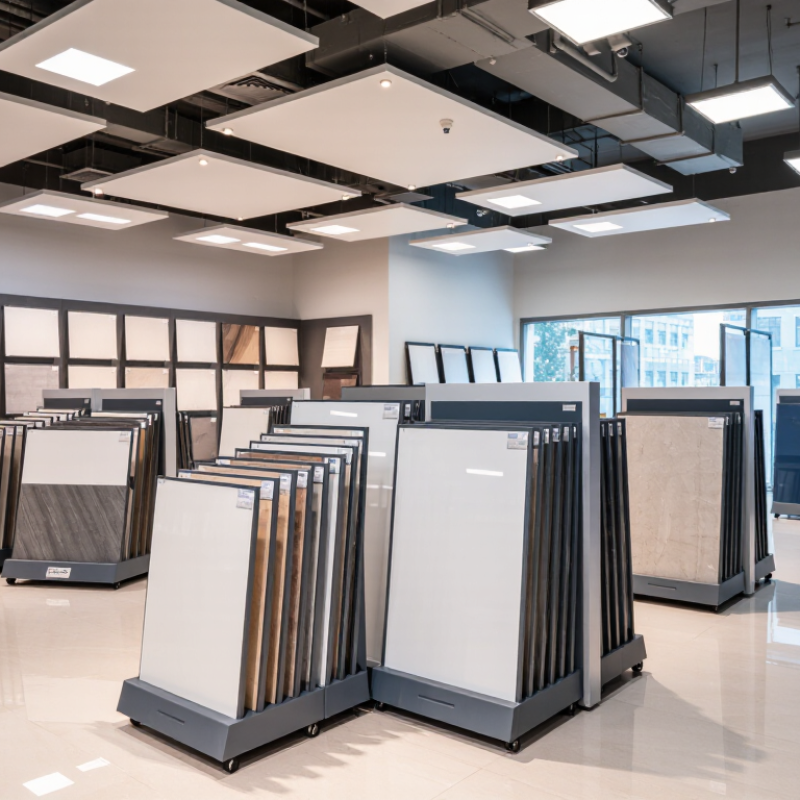
China Top 10 Tile Display Rack Suppliers for Global Buyers

Understanding Tile Display Racks and Their Role in Tile Retail

Tile display racks do more than hold samples. They help shoppers compare color, texture, finish, and size at a glance. In a busy showroom, a well-planned rack keeps large slabs accessible while leaving clear walking space. Pull-out panels can make comparisons easier, but they need smooth movement and enough room to open safely. Good lighting matters, too. A warm lamp can make a pale tile look different from daylight.

Tips: Check each sample from standing and seated height. Keep labels visible. Leave room for customers to pull panels out without bumping into nearby displays.

Rack choice should reflect the tiles being sold. Heavy or oversized pieces need stable support and careful loading. Smaller sample boards may work better on compact, rotating stands. Retail teams should also consider how often displays change and whether staff can replace samples without lifting awkwardly. These details sound ordinary, but they affect daily use. A rack that looks impressive in a photo may feel cramped after several customers gather around it. Measure the display area, test sample access, and ask staff what becomes inconvenient during a busy day. No layout is perfect; actual shopper behavior may reveal a blind spot.

Common Rack Types, Materials, and Display Features

Tile display racks commonly use A-frame stands, pull-out panels, or compact countertop units. A-frames show large slabs on both sides and suit busy showrooms. Pull-out systems save floor space, but their rails need smooth travel under load. Small samples fit countertop racks. They help buyers compare color and surface texture quickly.

Steel frames handle heavy porcelain panels and frequent handling. Aluminum is lighter and easier to move, though it may flex if undersized. Wood or engineered board can soften a showroom’s appearance, but edges need protection from chips and moisture. Mixed construction is common: metal supports with replaceable wood or polymer sample holders. Check load ratings, welds, wheel locks, and panel stops before ordering. Details matter.

Useful display features include clear size labels, swappable sample clips, and adjustable viewing angles. Neutral lighting helps reveal glaze variation; harsh spotlights can distort color. For overseas purchasing, confirm packed dimensions, spare hardware, and assembly instructions, not just rack height. Request a loaded sample test when possible. A rack can look sturdy empty and feel different once full. That distinction deserves attention.

China Top 10 Tile Display Rack Suppliers for Global Buyers - Common Rack Types, Materials, and Display Features

A practical comparison of ten common tile display rack types offered by manufacturers. Designs, capacities, finishes, and dimensions vary by supplier and should be confirmed against the intended tile samples and showroom layout.

No. Common Rack Type Typical Tile Samples Common Materials Typical Display Features Suitable For Buyer Checks
1 A-Frame Rack Large-format porcelain slabs and panels Steel frame, protective rubber or polymer contact strips Two-sided vertical storage; supports samples leaning against a stable frame Slab showrooms, warehouses, and sample handling areas Confirm load rating, slab dimensions, base stability, and edge protection.
2 Pull-Out Drawer Rack Medium and large tile panels or sample boards Powder-coated steel, drawer rails, protective liners Sliding trays reveal samples individually while keeping them organized Showrooms with a broad selection and limited floor space Check extension length, rail strength, tray clearance, and sample weight.
3 Rotating Display Tower Small and medium-format tiles, swatches, and sample panels Steel or aluminum structure, bearings, plastic or metal holders Rotating access presents multiple samples within a compact footprint Retail counters and compact showroom zones Verify rotation smoothness, base stability, sample retention, and total height.
4 Swing-Panel Rack Large tile panels and coordinated surface collections Steel frame, hinges or pivot hardware, panel backing Panels swing open for side-by-side viewing and can be arranged in groups Showrooms displaying coordinated ranges or finish options Ask about hinge durability, opening clearance, panel security, and anchoring.
5 Sample-Board Rack Mounted boards, compact panels, and finish samples Steel or aluminum frame, plywood or composite boards, clips Boards can be grouped by collection, color, size, or surface finish Retail displays, specification libraries, and sales areas Confirm board dimensions, attachment method, labeling space, and replacement ease.
6 Ladder-Style Rack Medium-format tile panels and sample boards Powder-coated steel or aluminum, protective pads Inclined tiers make several samples visible at once Open showroom displays and retail floors Check tier spacing, tilt angle, anti-slip support, and overall footprint.
7 Waterfall Rack Small and medium tile samples or sample boards Steel or aluminum frame, metal arms, protective end caps Samples hang in a cascading arrangement for quick browsing Retail merchandising and frequently updated collections Check arm spacing, sample fit, secure stops, and accessible aisle clearance.
8 Sliding-Panel Rack Large-format panels and full-size finish samples Steel frame, track system, rollers, panel supports Panels slide along tracks to provide access without removing each one Showrooms with larger samples and limited display frontage Confirm track travel, roller maintenance, anti-derail features, and floor loading.
9 Modular Wall-Mounted Rack Sample panels, boards, and compact tile displays Steel rails or aluminum profiles, brackets, wall fixings Reconfigurable modules use vertical wall space and support grouped displays Showrooms seeking a fixed, space-efficient display layout Check wall construction, fixing requirements, module compatibility, and load limits.
10 Countertop Sample Stand Small tiles, finish swatches, and compact sample boards Acrylic, steel, aluminum, or coated wood components Compact, accessible presentation for hand-sized samples and product cards Sales desks, trade counters, and small retail spaces Confirm sample dimensions, stand stability, cleanability, and label visibility.

Procurement note: Before ordering, request drawings, material and finish details, a stated load capacity, packing specifications, and confirmation that the rack suits the target market’s showroom and shipping requirements.

How to Evaluate Chinese Tile Display Rack Suppliers

China Top 10 Tile Display Rack Suppliers for Global Buyers

How to Evaluate Chinese Tile Display Rack Suppliers

A supplier’s catalogue is only a starting point. Ask for drawings with rack dimensions, material thickness, maximum load, and finish specifications. Then compare those details with the weight and size of your actual tile samples. Test the real load. A rack that looks stable in a showroom may wobble when its panels are extended. Check welds, locking pins, sharp edges, and whether the base stays level on a typical shop floor. Request a sample or a recorded load test, not just polished product photos. Small details matter.

Review quality controls and export readiness together. The ISO Survey 2022 reported more than 1.2 million valid ISO 9001 certificates across 189 countries and economies; ask whether a supplier’s certificate is current and covers the relevant production site. Certification alone does not prove that a rack will meet your needs. Inspect a finished unit and confirm how defects are logged and corrected. The World Bank’s 2023 Logistics Performance Index ranked China 19th among 139 economies, but that country-level result cannot predict one factory’s shipping performance. Ask for recent lead-time records, packaging photos, and a written plan for replacement parts. One weak point in many evaluations is relying too heavily on the lowest quote. Compare the full specification, packing method, and after-sales response in writing.

How to Evaluate Chinese Tile Display Rack Suppliers

Suggested evaluation weights for comparing suppliers. These are a buyer’s scoring framework, not measured market statistics.

Score each supplier against the same criteria, using evidence such as product samples, drawings, test reports, quotations, and delivery records. The suggested weights add up to 100% and can be adjusted to match your project priorities.

Profiles of Ten Chinese Tile Display Rack Suppliers

China’s tile-display-rack suppliers serve showrooms, distributors, and tile manufacturers with different display needs. These ten supplier profiles help global buyers compare practical strengths without relying on catalog claims alone. Some suppliers focus on pull-out panels for dense showroom layouts; others make rotating towers, sample boards, or heavy-duty A-frame racks. Small details matter. Check panel thickness, wheel locks, edge finishing, and how easily staff can replace a tile sample.

Grand View Research estimated the global ceramic tile market at USD 227.8 billion in 2022 and projected a 6.3% compound annual growth rate from 2023 to 2030. That report tracks tile sales, not display fixtures, so it indicates market context rather than rack demand. For each supplier, compare stated load capacity with the weight and dimensions of your actual tiles. Ask for packing dimensions, assembly instructions, and photos of completed installations. A rack may look sturdy online and still wobble on a showroom floor.

The profiles also help buyers distinguish customization from standard production. Request drawings that show panel spacing, base dimensions, and the number of samples each rack holds. Confirm whether the finish suits your showroom’s lighting and cleaning routine. Details get missed. I would not treat a low quote as proof of value; replacement parts, packaging, and lead-time clarity deserve equal attention.

How Global Buyers Can Verify and Source Racks from China

Choosing a tile display rack supplier in China starts with evidence, not a polished catalog. Ask for dimensioned drawings, steel thickness, finish details, and load limits for each shelf. A rack holding heavy porcelain samples needs different support from one designed for small ceramic pieces. Request close-up photos of welds, brackets, and protective feet. Better still, inspect a sample and measure it yourself. Details matter.

Confirm whether the supplier manufactures racks or coordinates production through another factory. Ask for a live video walkthrough of the workshop and a written quotation that separates tooling, packaging, and freight costs. Check that the sample’s materials and dimensions match the approved production drawings. I would not treat one perfect sample as proof; production can drift. For a larger order, arrange an independent pre-shipment inspection and provide clear acceptance criteria, such as shelf spacing and coating condition. Ask how racks are packed, too. Foam between metal parts and reinforced carton corners can prevent scratches and bent edges during transit. Keep the answers in writing, especially when a specification changes.

We have the largest selection of new, remanufactured and quality pre-owned office furniture in the tri-state area.  We ship nationwide with regular deliveries to Pittsburgh, Erie, Uniontown, Washington, Akron, Cleveland, Beckley, Charleston, Clarksburg, Huntington, Morgantown, Parkersburg, Wheeling, Ashland, Ironton, and Lexington.

PITTSBURGH, PA

Showroom & Corporate Offices
1 Sexton Road
Pittsburgh, PA 15136

Local: (412) 771-0760
Fax: (412) 771-0764

WHEELING, WV

By Appointment Only
Local: (304) 232-0727

CHARLESTON, WV

Showroom
125 Lakeview Drive, Suite G
Cross Lanes, WV 25313

Local: (304) 345-3773
Fax: (681) 265-9039

MORGANTOWN, WV

By Appointment Only
Local: (304) 381-9119

HOURS OF OPERATION:

MONDAY-FRIDAY: 9am-5pm
SATURDAY: By Appointment