
Largest Selection of New and Used Office Furniture! Call 1-855-885-3375 or visit a showroom today!
Choosing the right Toys Storage Boxes can make a playroom safer, calmer, and easier to maintain. Yet attractive designs often distract buyers from practical details. A colorful box may look perfect online, but its hinges, edges, and actual capacity matter more at home.
This guide introduces seven practical tips for making a thoughtful purchase. The recommendations reflect common storage needs in family homes, including limited floor space, frequent cleaning, and changing toy collections. Measure the shelf, floor area, and largest toys before choosing a box. Check for smooth edges, stable construction, secure lids, and materials that are easy to wipe. Ventilation can also matter when toys remain stored for long periods. Small parts should stay away from very young children, even when a container appears convenient. Keep it simple.
A reliable storage solution should support children’s independence without creating avoidable hazards. Open bins may work better for daily play, while lidded boxes can reduce dust and visual clutter. Fabric boxes feel lightweight, but they may collapse under heavy toys. Wooden and plastic options often last longer, though quality varies between products. Personal experience teaches an uncomfortable lesson: the cheapest choice is not always the best value. I once underestimated how quickly a “large” box would fill with blocks and stuffed animals. That mistake made cleaning harder, not easier. Use the following tips to compare size, safety, accessibility, durability, and long-term usefulness with greater confidence.
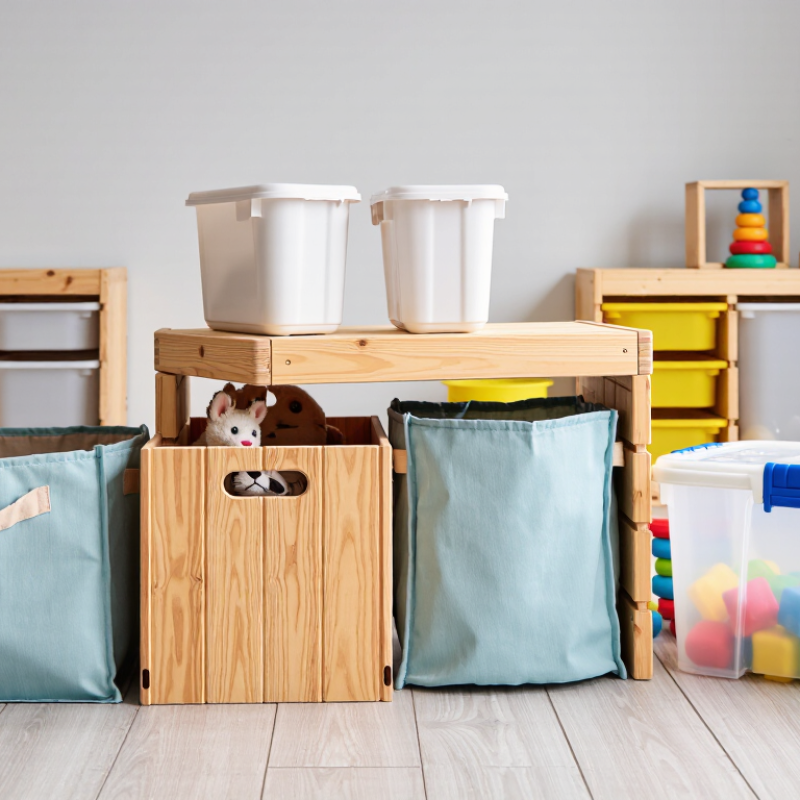
Before buying a toy storage box, define what must be stored and where it will stand. Measure the available floor width, depth, height, and nearby walking clearance. Do not measure only the empty corner. Doors, drawers, and lids need operating space.
Sort toys by size, frequency, and weight. Daily items need open bins within a child’s reach. Small pieces need lidded containers, but avoid deep boxes that hide forgotten toys. Circana’s 2023 Global Toy Industry Retail Sales Report recorded a 7% decline in global toy sales. That figure encourages careful buying, not automatic storage expansion. A smaller collection may need better separation rather than a larger box.
Safety changes the choice. The U.S. Consumer Product Safety Commission reported about 231,000 toy-related emergency-department injuries among children under 15 in 2023. Choose stable boxes with smooth edges, secure hinges, and ventilation where appropriate. Heavy containers should stay low. Wall-mounted units require suitable hardware and professional installation when needed.
Test the layout with cardboard first. It is cheap and slightly ugly. That helps. Place a mock box in the room for two days, then check whether children can open it without blocking a doorway. I once underestimated lid clearance beside a sofa. The box fit, but the lid did not. That small mistake changed the required depth. Consider future growth, too, but leave some empty space; a completely full box becomes difficult to use.
7 Tips for Buying Toy Storage Boxes: Choose Safe, Durable, and Child-Friendly Materials
A safe toy box begins with its material. Choose solid wood, food-grade plastic, or tightly woven fabric with no peeling coating. Avoid sharp metal edges, brittle panels, and strong chemical odors. Smell matters. A persistent odor may indicate poor ventilation or unsuitable finishes, although smell alone cannot prove a safety problem. Check the product description for material details, weight limits, and independent safety testing.
The U.S. Consumer Product Safety Commission reported 231,700 toy-related injuries treated in emergency departments among children under 15 during 2023. A storage box can create similar risks when lids slam, hinges pinch, or children climb inside. Select lightweight lids with slow-closing hinges, ventilation openings, and rounded corners. For younger children, open baskets may be safer than heavy-lidded containers. ASTM F963-23 provides widely recognized requirements for toy materials, surface coatings, and mechanical hazards, so testing against relevant standards adds useful confidence.
Durability also affects safety. Inspect seams, handles, wheels, and fasteners before buying. Choose water-resistant surfaces that can be wiped after spills. Avoid loose fabric threads and detachable small parts. A box should stay stable on a flat floor, not slide when pulled by a child. I once underestimated how quickly a full box becomes heavy. That mistake changed my preference toward several smaller containers. No material is perfect; regular inspection still matters. Replace cracked plastic, splintered wood, or damaged hinges immediately.
Buying a toy storage box is easier when size, shape, and capacity match your room. Measure the available floor space before shopping. Leave a few centimeters for opening lids or pulling drawers. Tip 1: Check both external and internal dimensions. Thick walls can reduce usable space. Tip 2: Choose capacity based on toy types, not only total volume. A tall box suits stuffed animals, while shallow bins fit puzzles and building pieces. I once chose a deep container for small toys, and sorting became frustrating.
Shape affects access and safety. Tip 3: Rectangular boxes usually use corners more efficiently than round ones. Tip 4: Pick stackable shapes only when the lower box remains easy to open. A narrow box may fit beside furniture, but it can tip when overloaded. Tip 5: Look for a wide base and stable construction. This matters on smooth floors. It is easy to overlook.
Capacity should support daily habits. Tip 6: Leave about 20 percent empty space, allowing children to return toys without forcing the lid. Tip 7: Separate frequently used toys from seasonal items. Open-top bins improve visibility, while lidded boxes reduce dust. Measure the largest toy too. A storage box can look spacious, yet fail because one awkward vehicle blocks everything. Materials, rounded edges, and smooth hinges deserve inspection. I cannot promise one shape works for every family, because children organize differently. Observe their real play routine for several days before deciding.
When buying a toy storage box, test accessibility before admiring its appearance. A child should open it without lifting a heavy lid or trapping small fingers. The U.S. Consumer Product Safety Commission’s 2022 Toy-Related Deaths and Injuries report recorded about 145,500 toy-related emergency-department injuries among children under 14. Storage cannot remove every hazard, but clear access can reduce hurried climbing and scattered toys. Choose rounded edges, stable construction, and ventilation holes when a lid is included. Keep it simple.
Organization depends on how children actually play. Open bins support quick sorting, while shallow compartments make small cars, blocks, and craft pieces easier to find. Label containers with words and pictures. A 2023 National Association of Professional Organizers survey reported that many households struggle with clutter, although storage alone does not create better habits. I once bought a deep box that looked spacious. It became a toy graveyard. Children could not see the bottom.
Cleaning features deserve equal attention. Select smooth, nonporous surfaces with few seams, removable liners, and washable handles. Avoid fabric interiors that hold crumbs and moisture. The U.S. Environmental Protection Agency advises choosing durable, cleanable materials to support healthier indoor environments. Check the maker’s care instructions, and avoid harsh cleaners around children’s belongings. A weekly wipe is realistic; daily perfection is not. Inspect hinges, cracks, and loose parts regularly. The best box is accessible, organized, and easy to maintain after real play.
| Tip | Evaluation Dimension | What to Check | Practical Benchmark | Why It Matters |
|---|---|---|---|---|
| 1 | Choose child-friendly access | Look for lightweight boxes, wide openings, and handles that are easy to grip. | A child should be able to open, carry, and return the box without lifting excessive weight or using complicated fasteners. | Simple access encourages children to tidy up independently and reduces the risk of dropping a heavy container. |
| 2 | Match capacity to toy size | Measure the available shelf or floor space and compare it with the box’s internal dimensions. | Leave enough room for toys to be removed without emptying the entire container; avoid filling a box so tightly that the lid cannot close. | Correct sizing improves accessibility and prevents damaged toys caused by overpacking. |
| 3 | Plan for organization | Consider removable dividers, separate compartments, stackability, and transparent or labeled sections. | Use separate areas for categories such as building pieces, dolls, vehicles, art supplies, and puzzles. | Categorization makes retrieval faster and reduces the number of small pieces being mixed together. |
| 4 | Check stability and stacking | Inspect the base, corners, lid fit, and whether stacked boxes remain level and stable. | Place heavier containers at the bottom and keep frequently used toys at a low, reachable height. | Stable storage lowers the chance of tipping and makes daily access more convenient. |
| 5 | Prioritize easy cleaning | Select smooth, nonporous surfaces with few seams, grooves, or fabric areas that can trap dust. | The interior should be reachable with a damp cloth, and removable parts should be easy to wash according to the care instructions. | Smooth surfaces are easier to wipe and generally retain less dirt than textured or absorbent materials. |
| 6 | Review safety details | Check for rounded edges, secure hinges, smooth handles, and lids that do not slam shut or trap fingers. | Avoid damaged boxes, sharp exposed hardware, unstable wheels, and containers with small detachable parts accessible to young children. | A storage box is handled frequently, so construction details affect everyday injury and breakage risks. |
| 7 | Consider long-term flexibility | Look for modular sizes, neutral designs, replaceable labels, and uses that can change as children grow. | Choose containers that can later hold books, clothing accessories, craft materials, or hobby supplies. | Adaptable storage remains useful for longer and can reduce the need to purchase replacement containers. |
Quick checklist: Before buying, verify the box dimensions, usable capacity, maximum load guidance, cleaning instructions, lid or hinge design, and the storage location’s height and available floor space.
7 Tips for Buying Toy Storage Boxes: Check Portability, Appearance, Price, and Long-Term Value
A storage box should move easily from a bedroom to a living room. Check its empty weight, side handles, lid grip, and wheel stability. A 2024 Circana industry report recorded an 8% decline in U.S. toy sales during 2023. That change makes practical spending more important. A cheaper box may look attractive, but thin plastic can crack under frequent use. I once bought one with a beautiful lid. It became awkward after two weeks.
Appearance still matters because children use what they can recognize. Choose clear panels, simple colors, or large picture labels. Avoid deep boxes that hide small building pieces. Measure the shelf, doorway, and available floor space before ordering. A box that wastes vertical space may create clutter again. It happens easily.
Price should be compared with capacity, material quality, and expected service life. Look for reinforced corners, smooth hinges, and surfaces that wipe clean. The U.S. Consumer Product Safety Commission recommends checking children’s products for accessible small parts and unsafe edges, which also applies to storage accessories used by young children. ASTM F963 is a useful reference for toy safety practices, although a storage box may not be classified as a toy. Long-term value is not only about years of survival. It includes fewer replacements, easier cleaning, and safer daily handling. My judgment may still be imperfect; attractive design can influence me too much. Recheck the box after several months. That is the real test.
Scores use a 1–10 practical benchmark across portability, appearance, price value, durability, and storage capacity. Lightweight fabric boxes are easiest to move, while stackable plastic boxes provide stronger long-term value through durability and capacity. Compare all five factors instead of choosing based on appearance or price alone.